After the catalogue: Patek Philippe's Saatchi and Vintage Collection watches
Tracing the discontinued references that Patek Philippe quietly brought back, their unusual dials, and what sets apart the watches collectors now call Saatchi and Vintage Collection pieces.
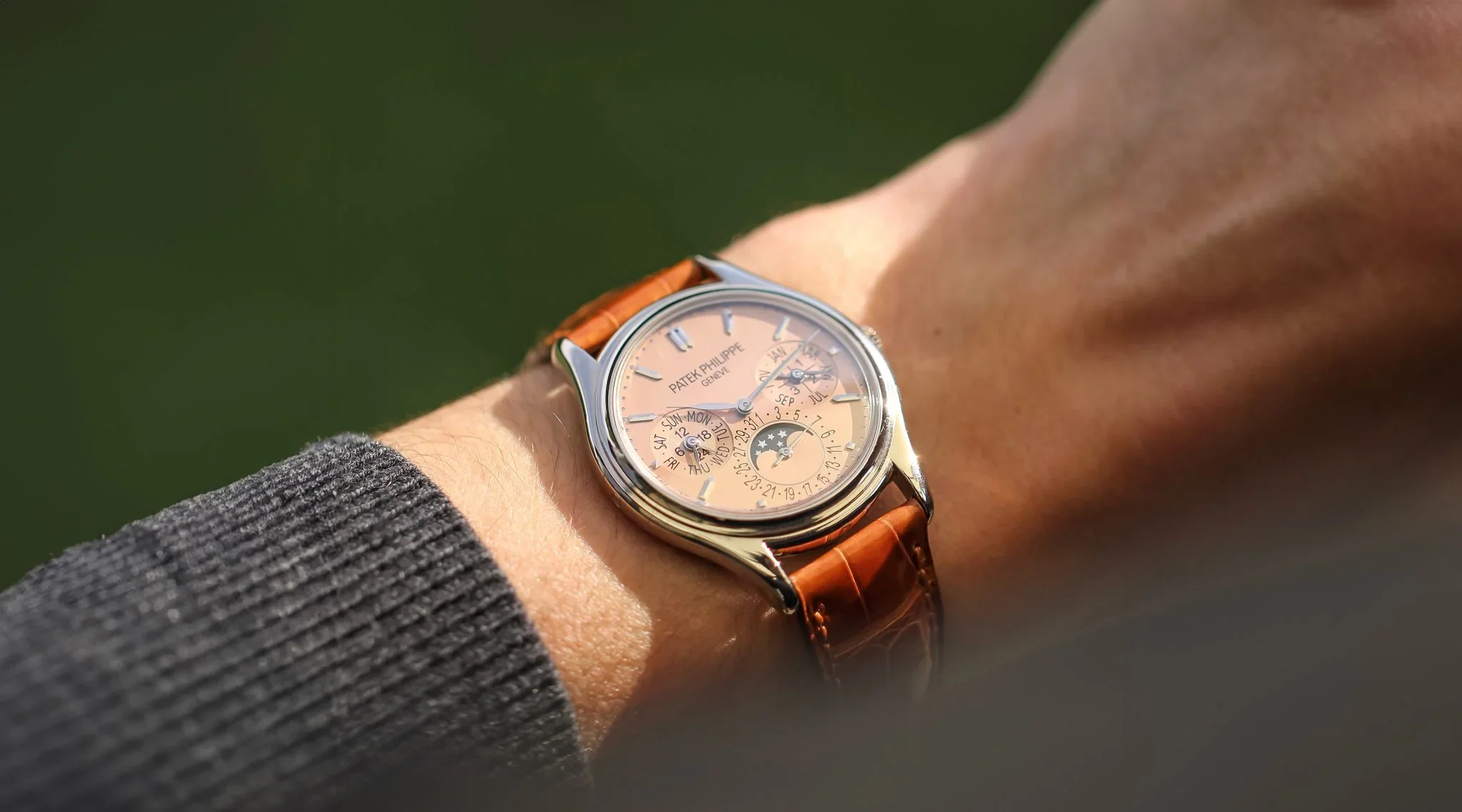
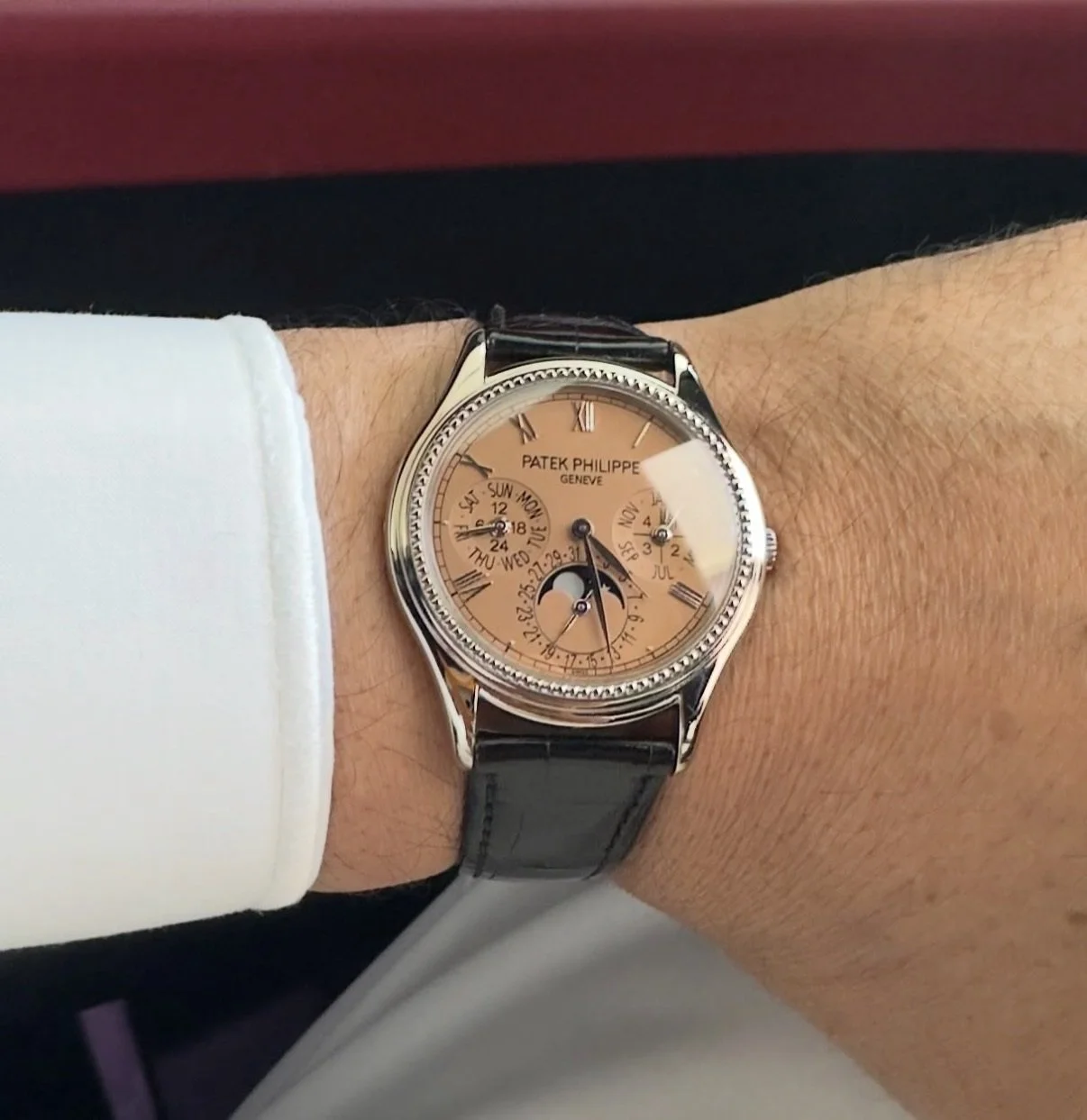
3940G-029: Watch4Moi
Introduction
One of the most interesting corners of modern Patek Philippe is also one of the least properly recorded. Years after references such as the 3940, 3970, 5059, 5070 and 5970 had left the catalogue, Patek quietly made them again. They came back in small numbers, often with dial configurations that had never appeared during the references’ normal production lives, and they were offered privately rather than launched as a conventional collection.
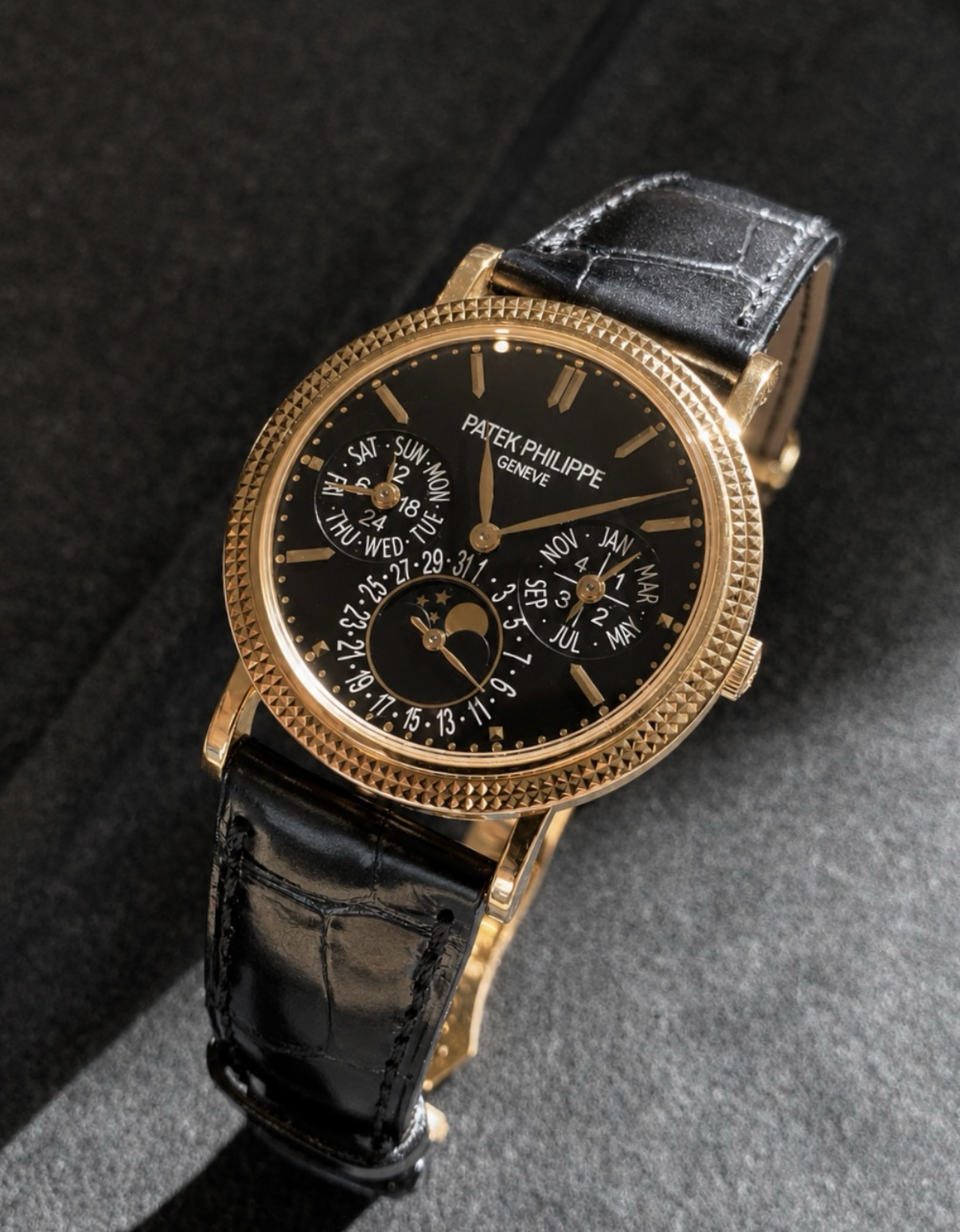
What makes them interesting is that they are not simply unusual dial variants. They are discontinued references being produced again, sometimes many years later, with different dials, typography, hands and other details that distinguish them from the original watches. In some cases, the design also borrows from earlier special-order Pateks, while giving the watches a noticeably more modern look than the original production versions.

5070P-013: A Collected Man
Despite that, surprisingly little is known about them. Patek has never properly explained how the watches came about, how many were made, how long they were produced for or even whether there was an internal name for the wider group. In the absence of much information, the accepted story became that these were “Saatchi watches”, usually one of five, made for the 2015 London exhibition. That may be true for some individual watches, but it does not seem to explain the group as a whole.
The 2015 Watch Art Grand Exhibition at the Saatchi Gallery remains the most visible part of the story. The surviving price list is important because it gives us a contemporary record of a group of discontinued references being offered together. But examples have now surfaced with certificates dating from before the exhibition and others from several years afterwards. Some Saatchi-listed configurations continued to appear later, while other revived references and dial combinations were never on the London list at all.
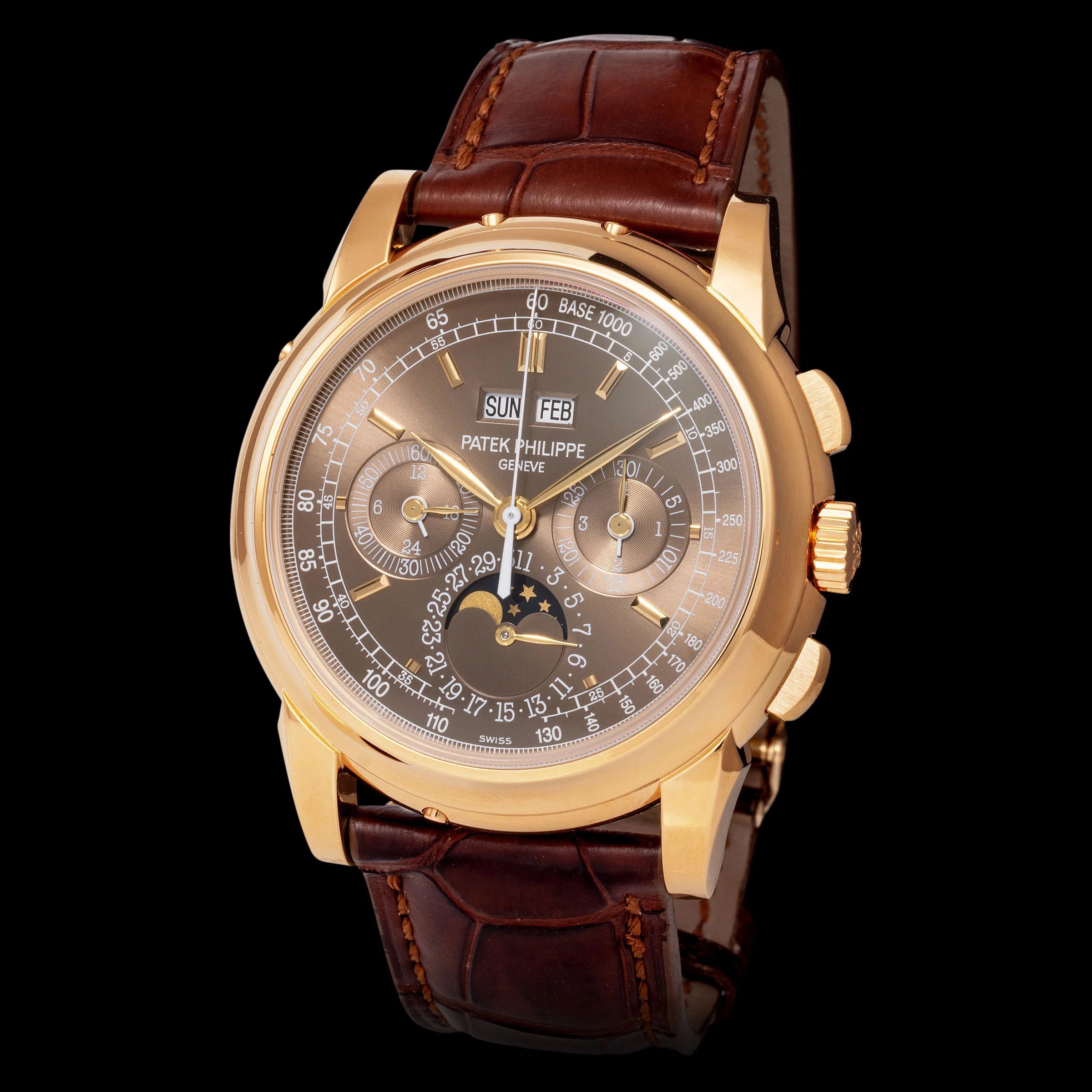
5970J-014: Monaco Legend Auctions
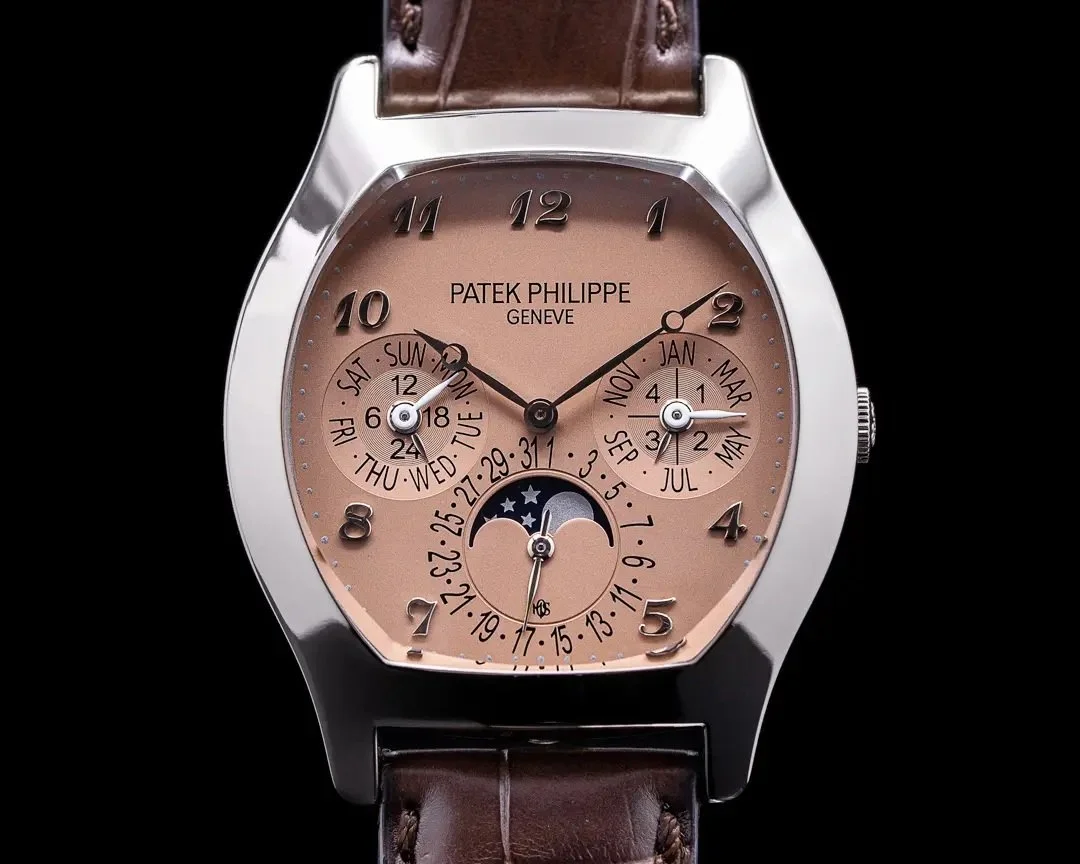
5041G-022: European Watch Company
This guide is an attempt to bring together what has surfaced so far and separate the parts that can be documented from the assumptions that have built up around them. The more examples that appear, the harder it is to see Saatchi as a self-contained group. It looks instead like one public moment in a much broader period of special production by Patek Philippe.
London 2015: when the watches came into view
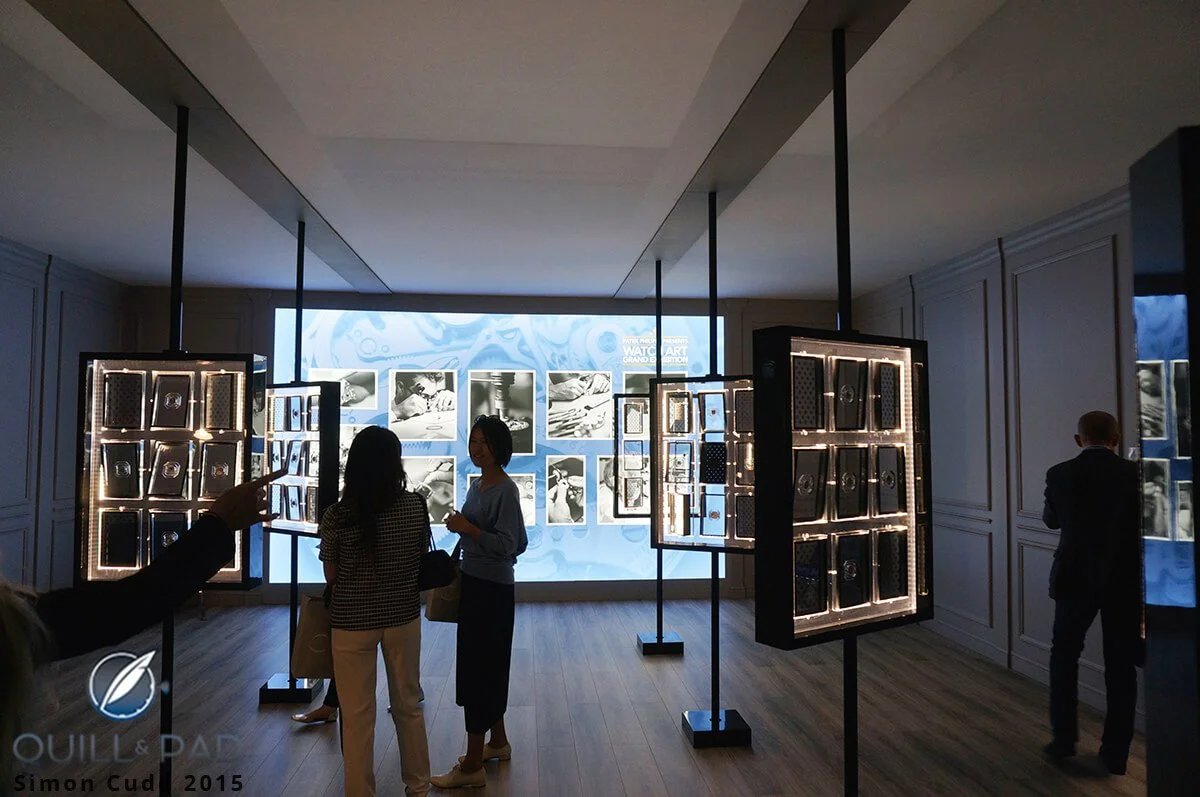
Patek Philippe’s Grand Exhibition at the Saatchi Gallery in London: https://quillandpad.com
The Watch Art Grand Exhibition ran at the Saatchi Gallery from 27 May to 7 June 2015. Patek Philippe records more than 400 watches and 42,500 visitors, with the Napoleon Salon recreating the corresponding room at the manufacture in Geneva. The exhibition ranged far beyond the watches discussed here: museum pieces, Rare Handcrafts, current-production watches and formal London special editions were all part of the same event.
For the discontinued references, the most useful surviving document is the price list. Under the heading “Napoleon Room Pieces” it records 19 reference-and-suffix combinations. That list matters because it gives us something contemporary and objective. A dealer description written years later may call a watch “Saatchi”; the 2015 list tells us whether that exact configuration was actually part of the London group.
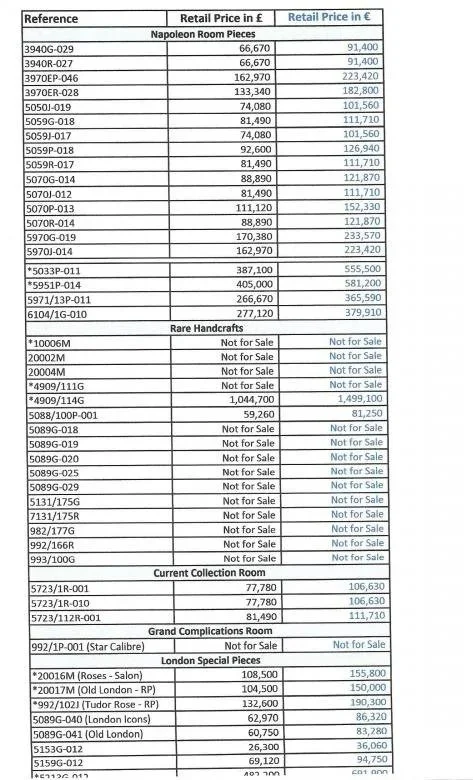
The surviving 2015 London Grand Exhibition price list. The Napoleon Room section is the contemporary starting point for the watches discussed here. Source: Patek5070.wordpress.com
The Napoleon Room price list and specification (where known)
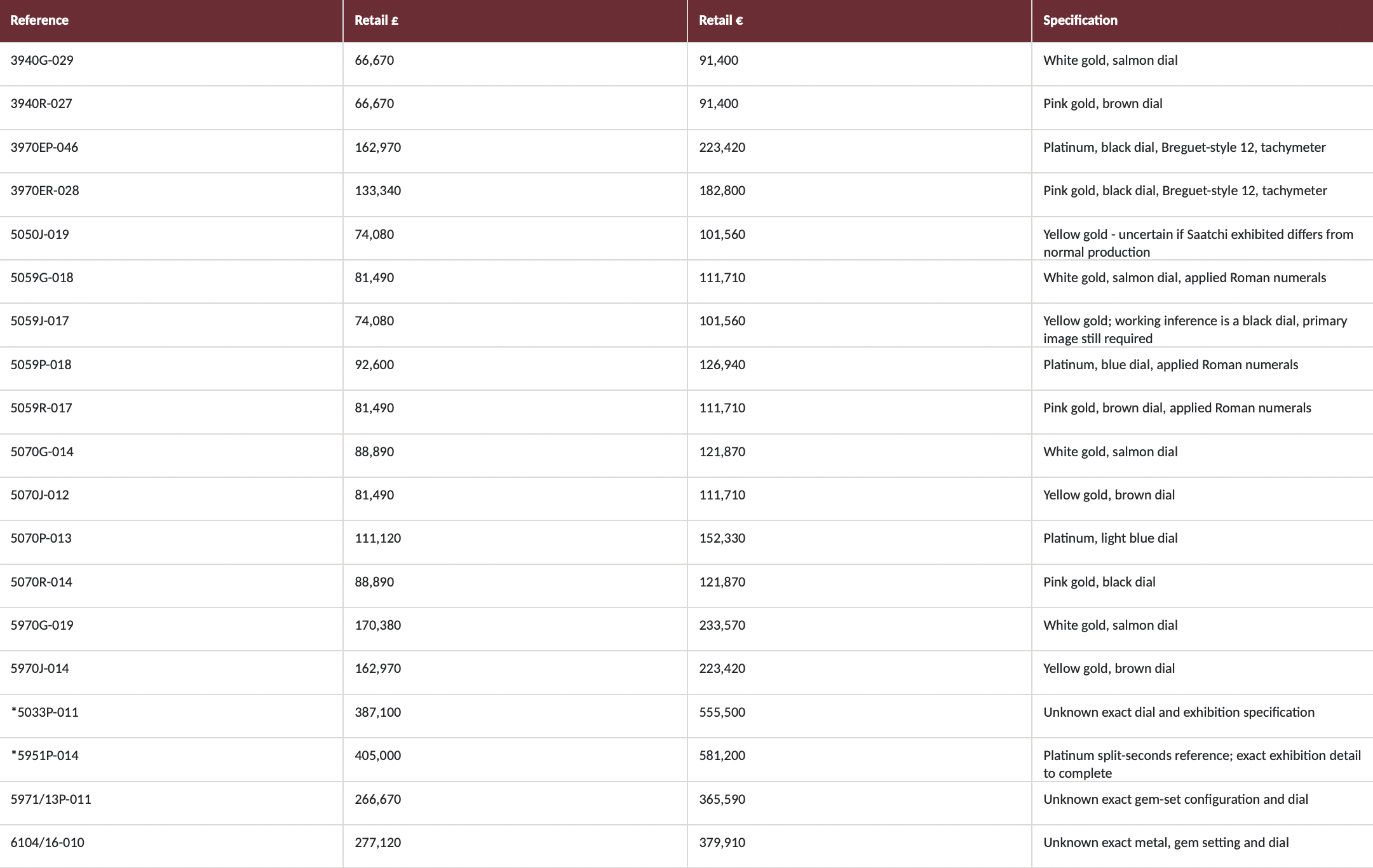
The list confirms that these 19 configurations were grouped and priced as Napoleon Room pieces. That is the cleanest basis we have for using “Saatchi-listed” as a description. It also makes the group broader than the handful of watches that normally dominate discussion. Four 5059 variants appear alongside the 3940s, 3970s, 5070s and 5970s, as do several more complicated references that remain much less well mapped.
What do we actually mean by “Saatchi” and “Vintage Collection”?
The terms “Saatchi watch” and “Vintage Collection” were coined by collectors rather than Patek Philippe. Patek has never publicly defined the group, explained how the watches were produced or disclosed much about them at all. The terminology has therefore developed around the watches themselves, rather than from any official Patek classification.
For the purpose of this guide, a “Saatchi watch” is one of the discontinued references and dial configurations included among the Napoleon Room Pieces at the 2015 London exhibition.
“Vintage Collection” is broader. Collectors use it for the later, out-of-production watches that share the same basic idea: discontinued references brought back with new factory dial configurations and offered to important clients. Most of the watches described that way surface after Saatchi, but the boundary is not clean. Dated examples from 2014 show that the practice was already underway before the London exhibition, while Saatchi-listed configurations continued to be delivered years afterwards.
The name is slightly curious with hindsight. Many of the references involved are now more commonly described as neo-vintage rather than vintage. Had that terminology been as established when collectors started using “Vintage Collection”, “Neo-Vintage Collection” might have been the more accurate label!
A working timeline

Not everything at Saatchi was a “Saatchi watch”
It sounds contradictory, but not every special watch shown at the Saatchi Gallery is what collectors now mean by a “Saatchi watch”. The exhibition included a separate group of formal London Special Pieces. These were contemporary references made specifically to commemorate the London event and, unlike the Napoleon Room watches, their London connection was explicit.
The reference 5159G-012 is the clearest example for this article because the 5159 was the successor to the discontinued 5059. Patek made the 5159 London Edition as an 80-piece limited series, with a special dial and an officer-style hinged caseback engraved “PATEK PHILIPPE LONDON 2015”.
The 5159 was explicitly produced as a London commemorative edition. That is why the term “London Edition”, which is sometimes also applied to the Napoleon Room “Saatchi watches” is best avoided.
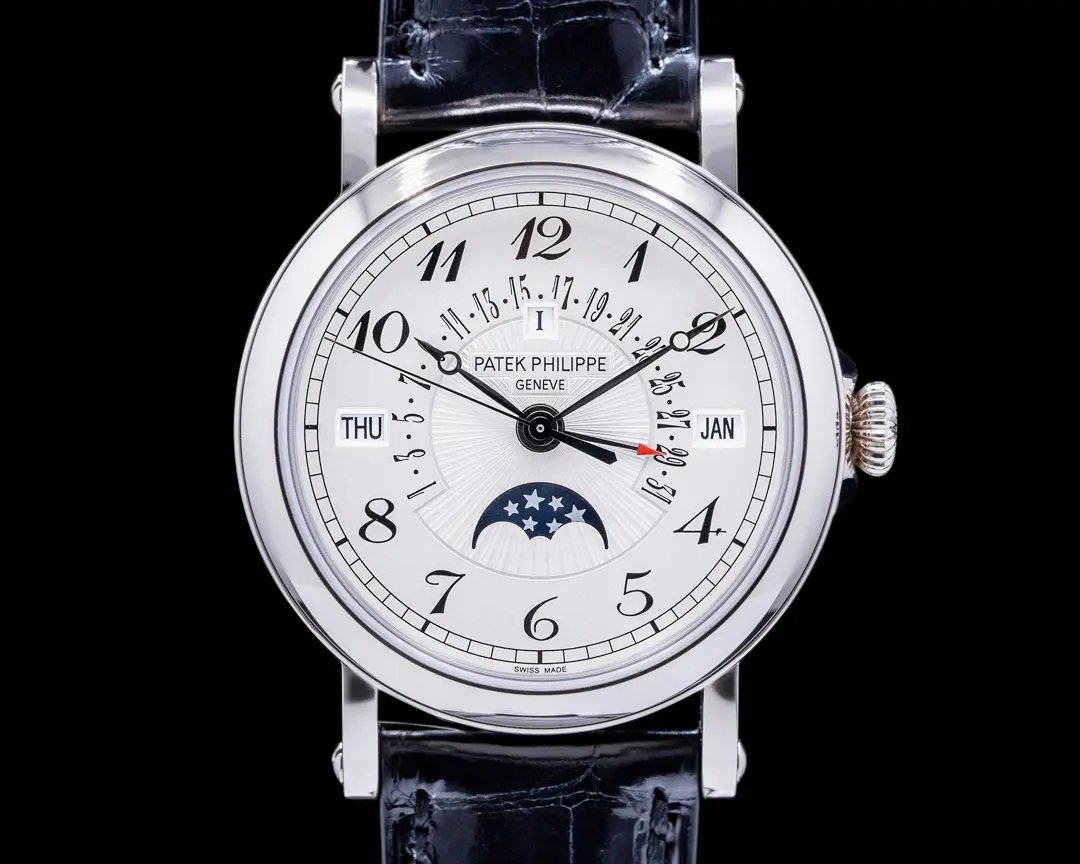
5159G-012
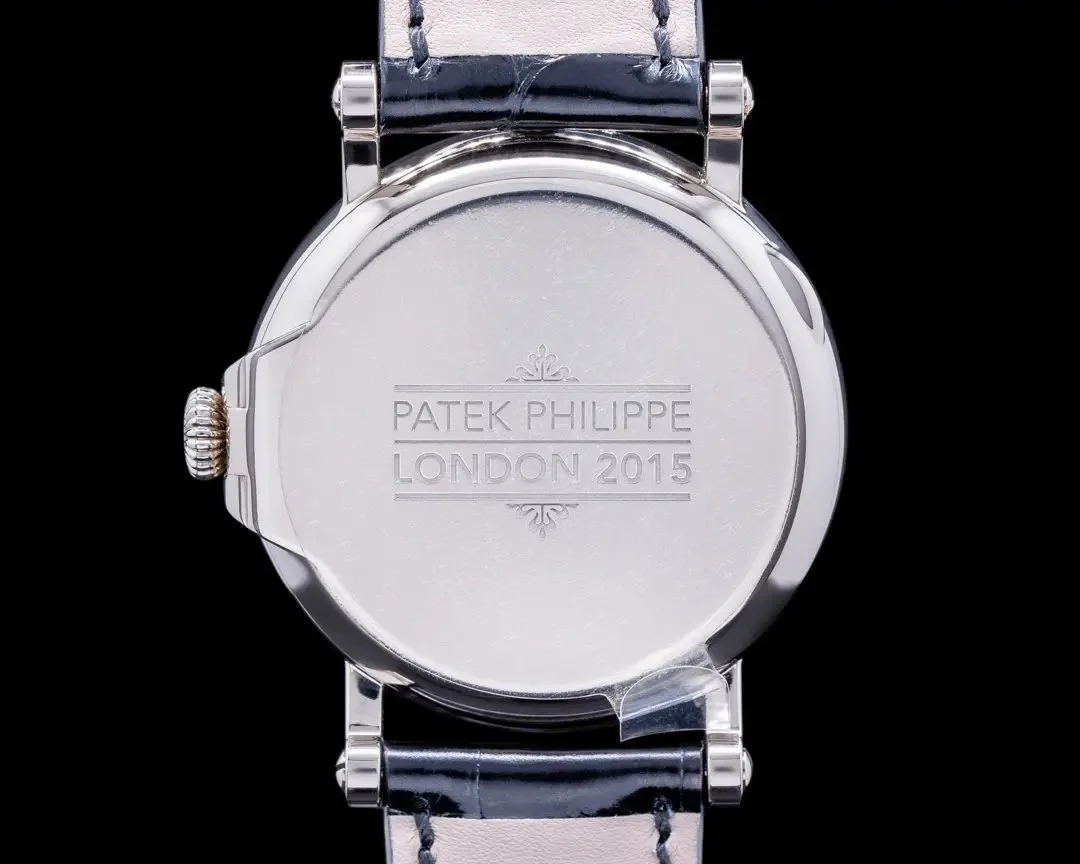
5159G-012
Reference 5159G-012, one of the formal London Special Pieces. It is useful context because Patek treated it differently from the revived 5059s in the Napoleon Room. Source: www.europeanwatch.com
The watches shown at Saatchi
When viewed as a whole, the Napoleon Room watches begin to look less like random dial colours and more like a deliberate exercise in revisiting familiar references. Some of the changes are obvious, others are quite subtle, and in many cases implemented across references, like leaf hands and modern fonts, meaning these were not standard production style dials, Patek was reworking and modernising the visual character of the watches.
3940G-029 and 3940R-027
The white-gold 3940G-029 uses a salmon dial, while the pink-gold 3940R-027 uses brown. Both move the 3940 away from the more vintage typography and dauphine hands associated with ordinary production and incorporate the leaf hands seen across these special references. The design language, notably the fonts, mean the similarities with the successor 5140 are obvious, but, as discussed later, these are not simply 5140 dials fitted into 3940 cases.
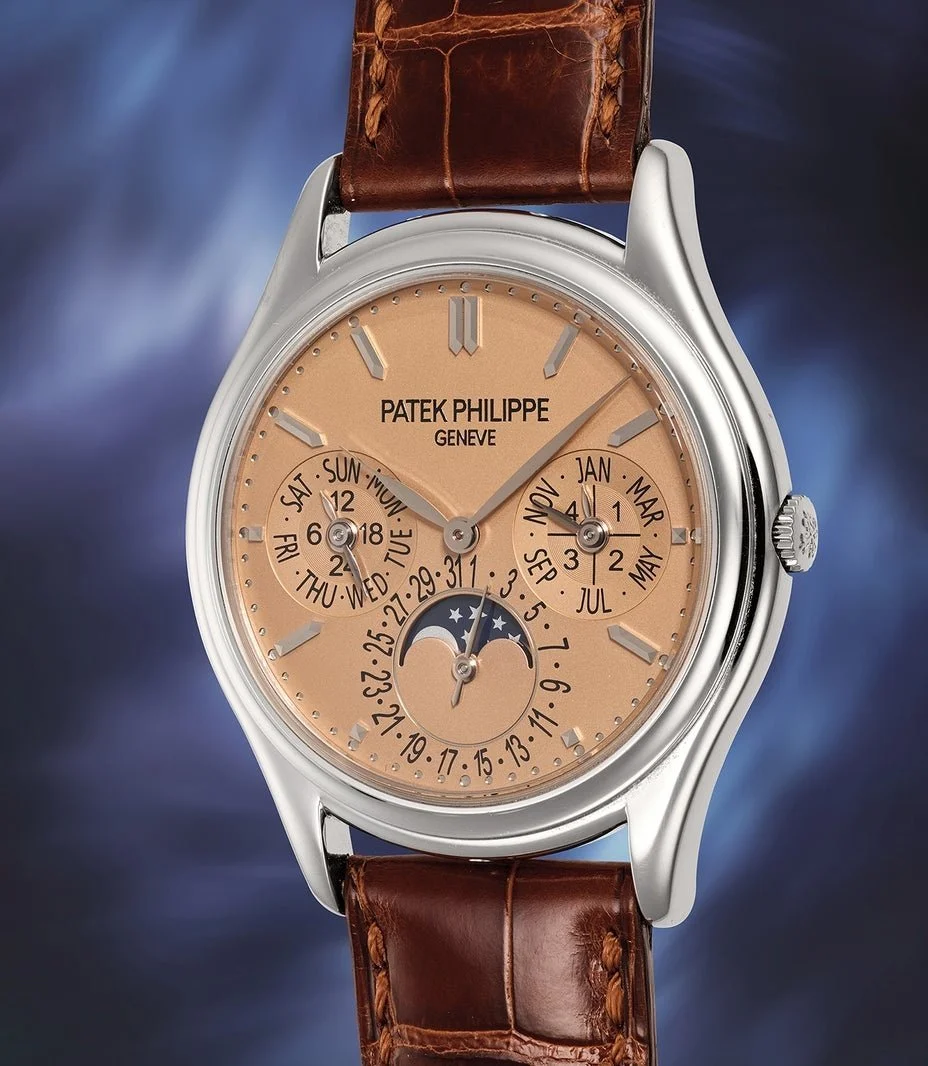
3940G-029
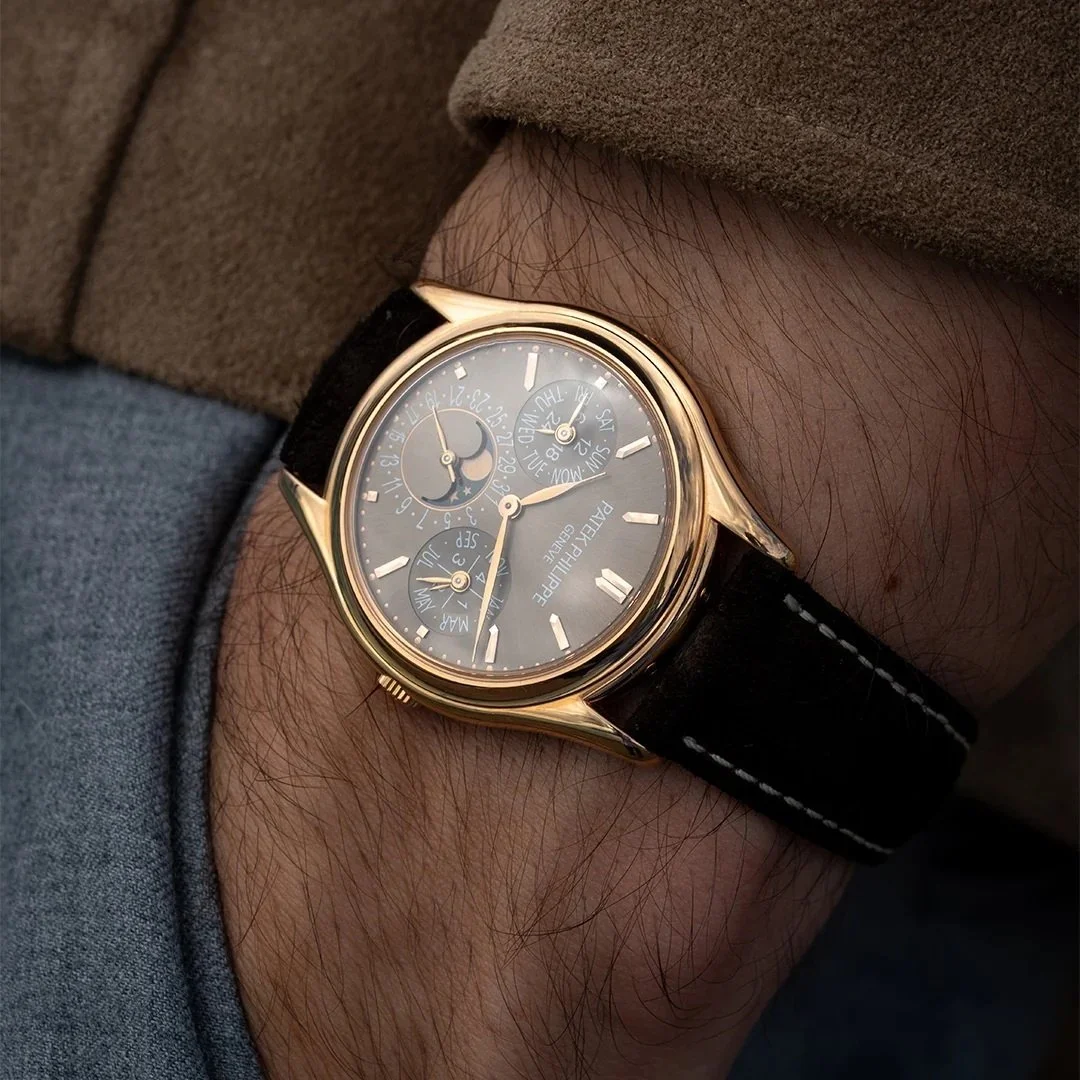
3940R-027
Reference 3940R-027 in pink gold with metallic brown dial. Kinsmen dates this full-set example to circa 2021, showing how long a Saatchi-listed configuration could continue after London. Source: kinsmen.vip
3940G-029: https://www.phillips.com
3940R-027: kinsmen.vip
3970EP-046 and 3970ER-028
The Saatchi-listed 3970s are platinum and pink gold respectively, both with black dials, a single applied Breguet-style 12 and an outer tachymeter. The tachymeter is the more important detail. It was not a feature of the standard-production 3970 and had previously appeared on exceptional special-order versions of the reference. Its reappearance here gives the Saatchi watches a clear link to that earlier tradition without making them copies of any one special order.
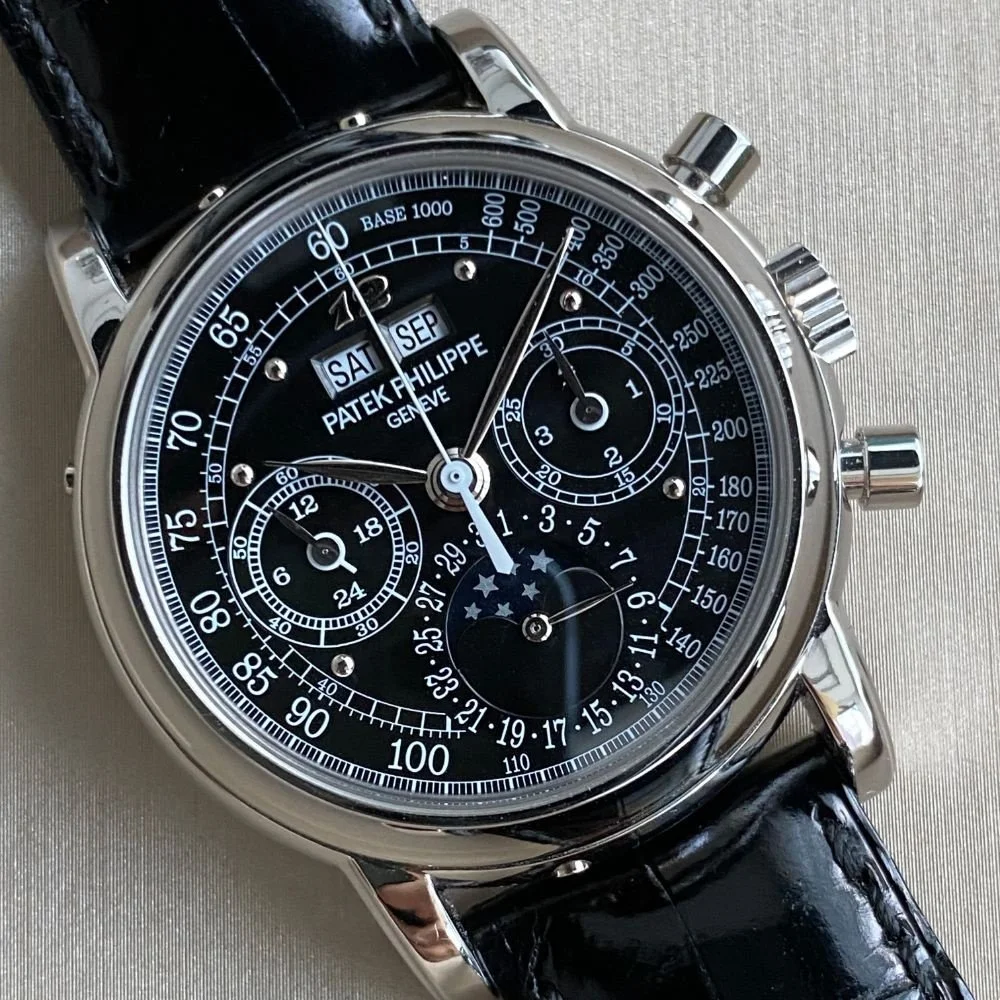
3970EP-046
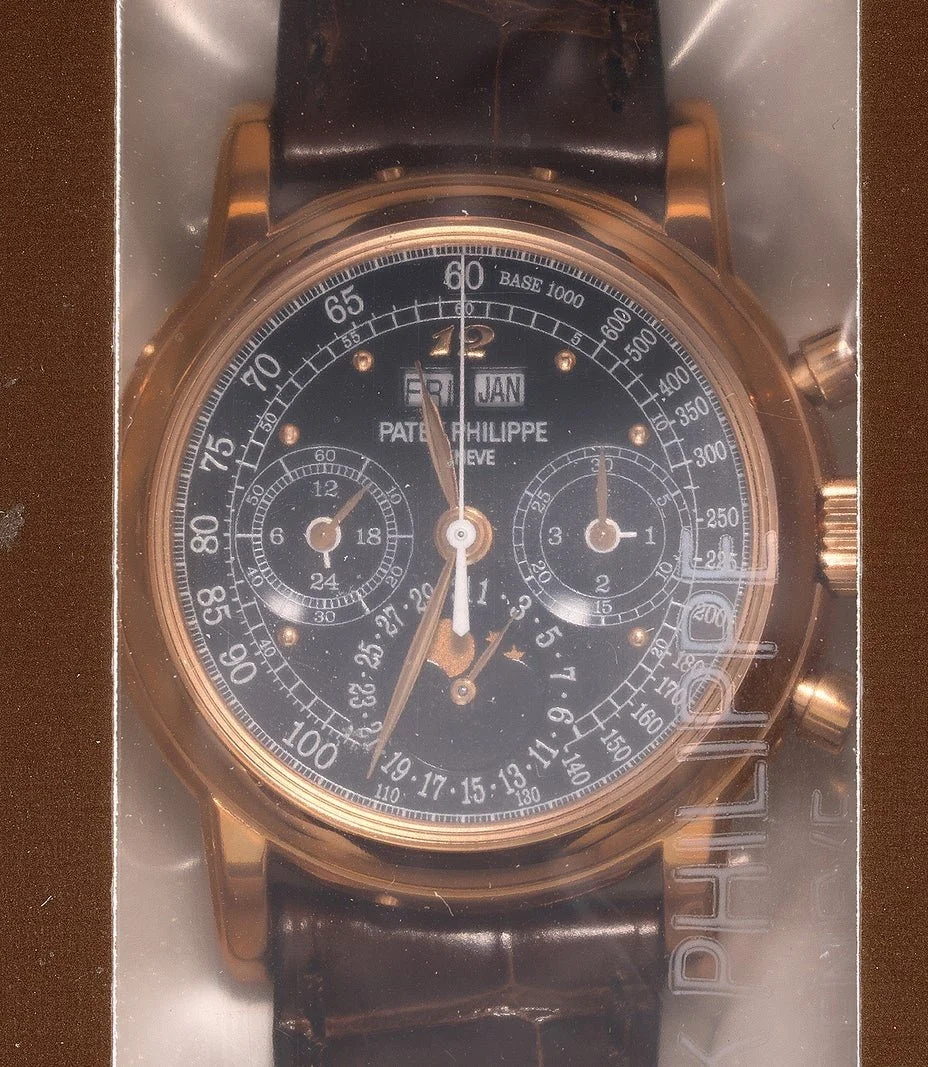
3970ER-028
The platinum 3970EP-046. The black dial and single Breguet 12 are striking, but the outer tachymeter is the more unusual detail in the context of the regular 3970. Source: www.phillips.com
5050J-019 and the four 5059s
The 5050 remains one of the less resolved watches on the Napoleon Room list. The price list records a 5050J-019, but that suffix is already known from normal-production 5050s, with the familiar silvered dial and baton indexes. No securely identified Saatchi 5050 has yet surfaced that allows us to reconcile the entry with the other special watches in the group.
This is particularly interesting because several unusual 5050s have since appeared with very different factory dials and later suffixes. They may help explain what was happening around the reference, but they raise as many questions as they answer. We return to those watches later when looking at the wider Vintage Collection.
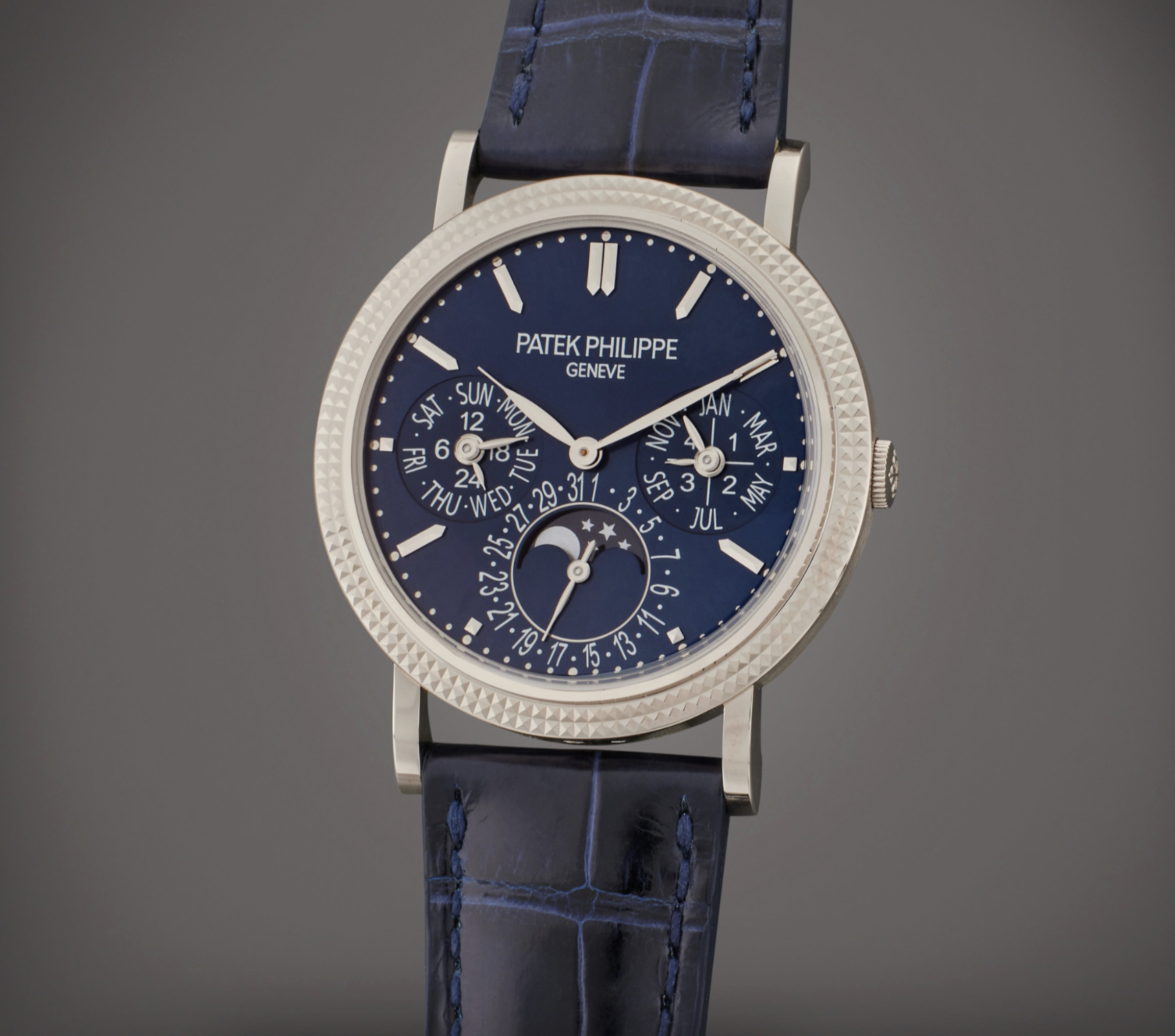
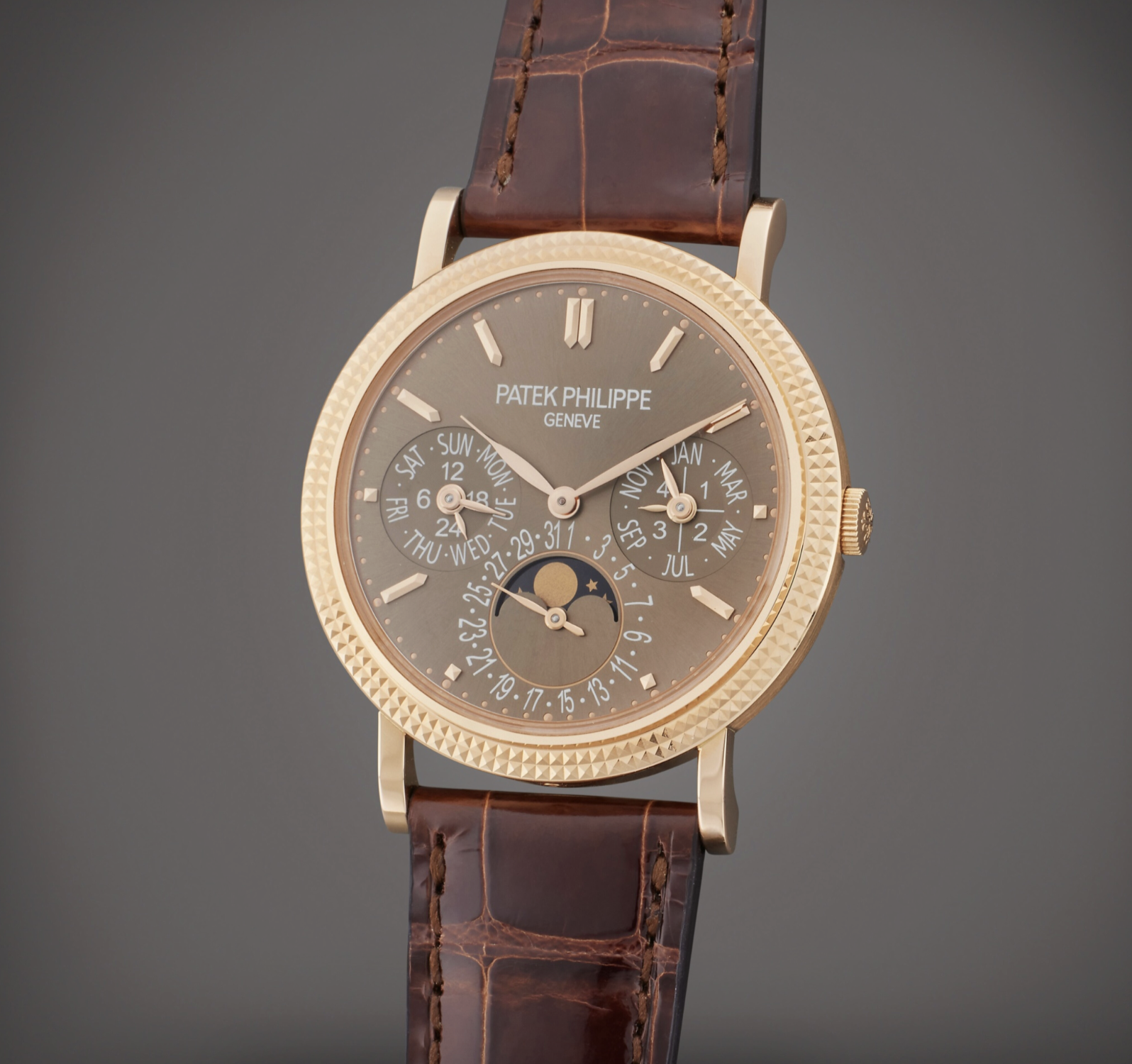
The 5059s are better understood. The special dials are cleaner than the regular watch, using thin applied Roman numerals and more open space. They are visually closer to the earlier 5050, a comparison also made by Gary Getz in his writing on the group. The London list records 5059G-018, 5059J-017, 5059P-018 and 5059R-017. The white-gold watch is known with a rose or salmon dial, platinum with blue and pink gold with brown. The exact 5059J-017 remains unresolved, although the wider pattern across these watches makes a black dial a reasonable working assumption.
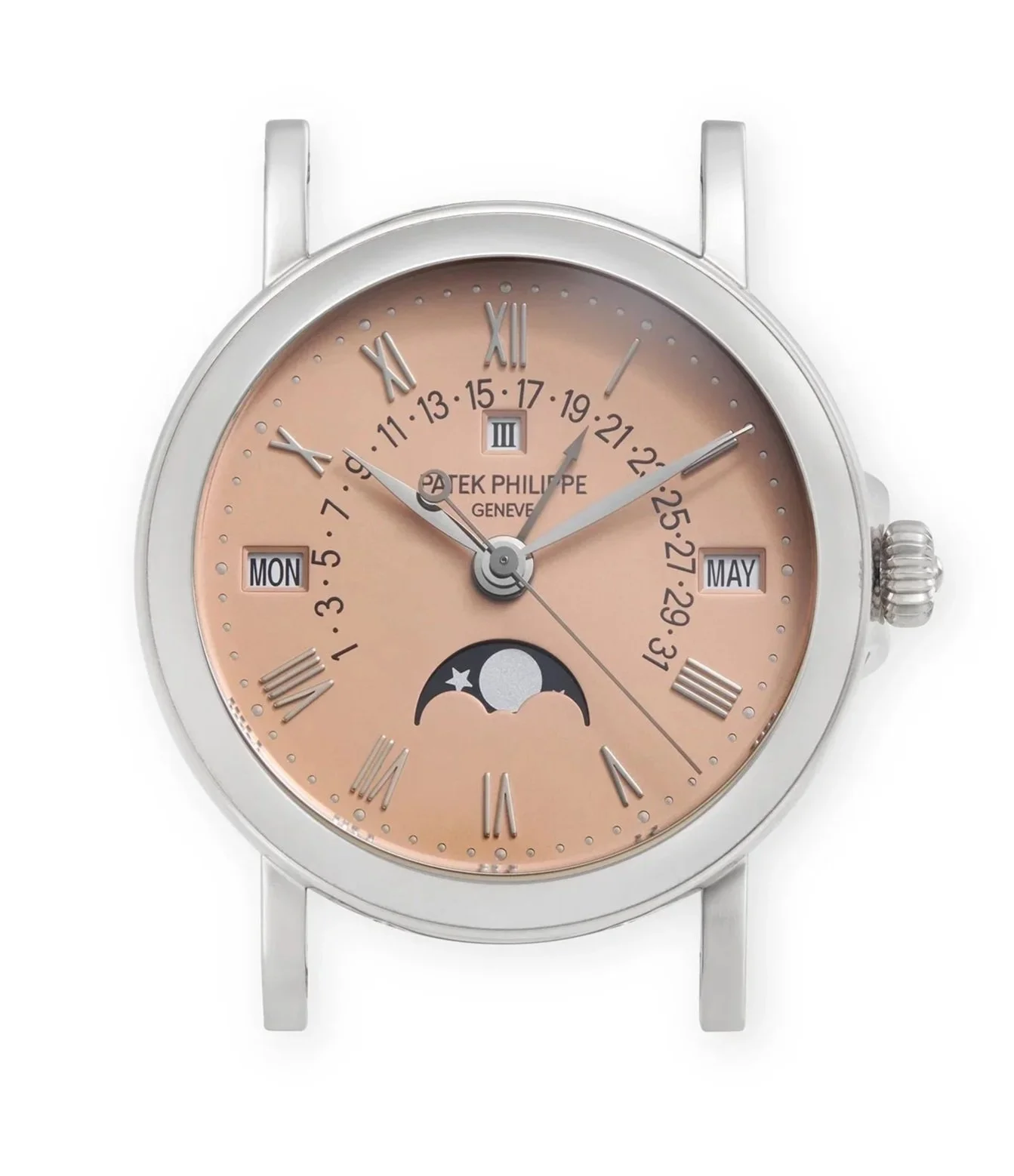
5059G-018
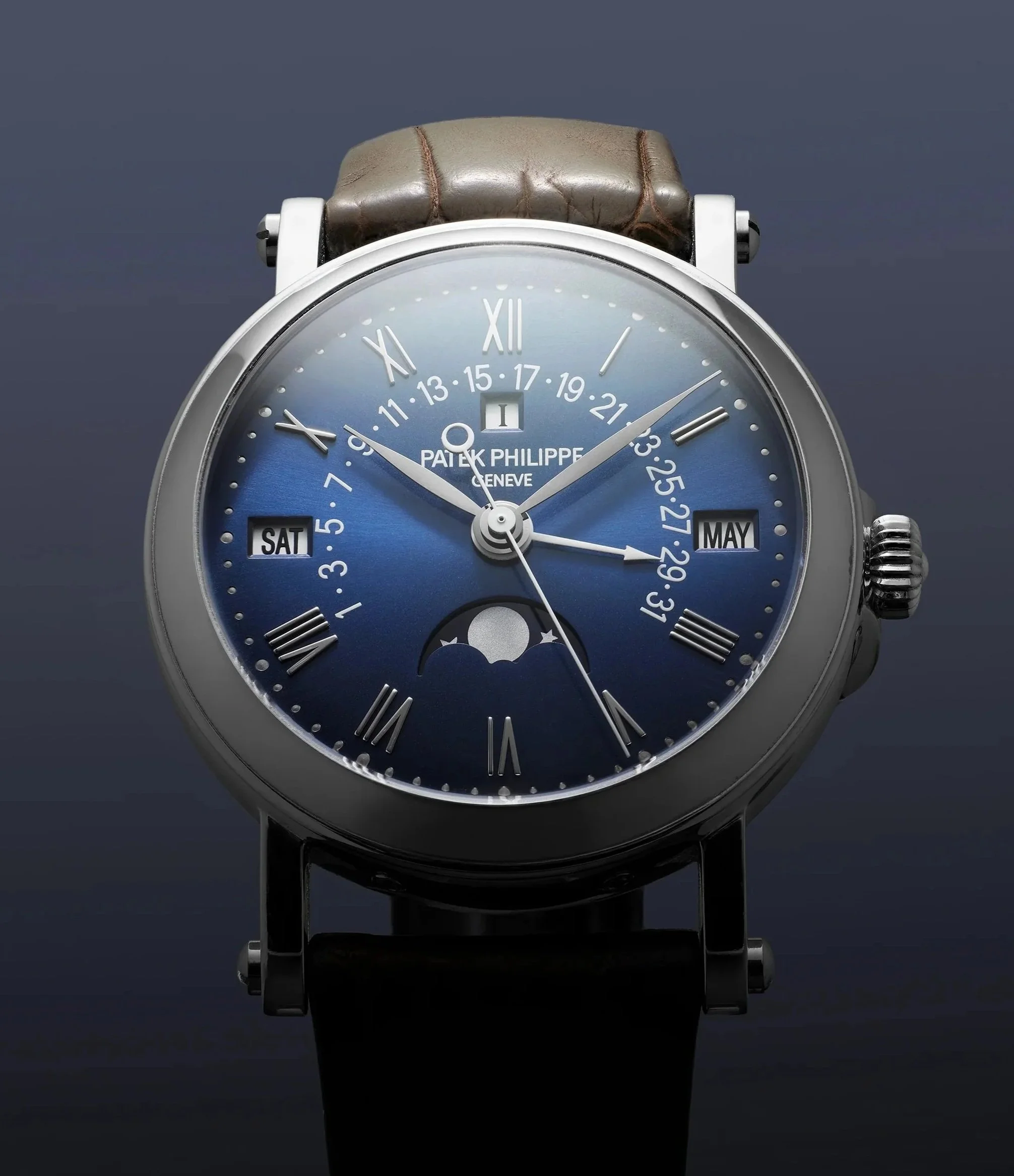
5059P-018
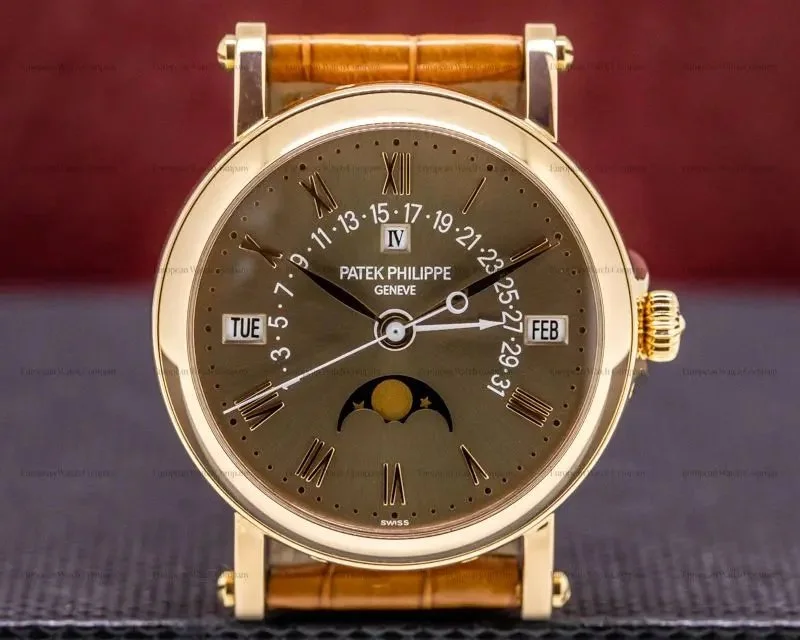
5059R-017
5059G-018, 5059P-018: https://www.acollectedman.com
5059R-017: https://www.europeanwatch.com/
5070G, J, P and R
The price list contains a special 5070 in each metal: salmon in white gold, brown in yellow gold, light blue in platinum and black in pink gold. These are now among the best recognised watches in the group. Their differences go beyond colour. Typography, subsidiary-register printing and small details of the scales were revised, giving a familiar 5070 a noticeably different face without changing its basic architecture.
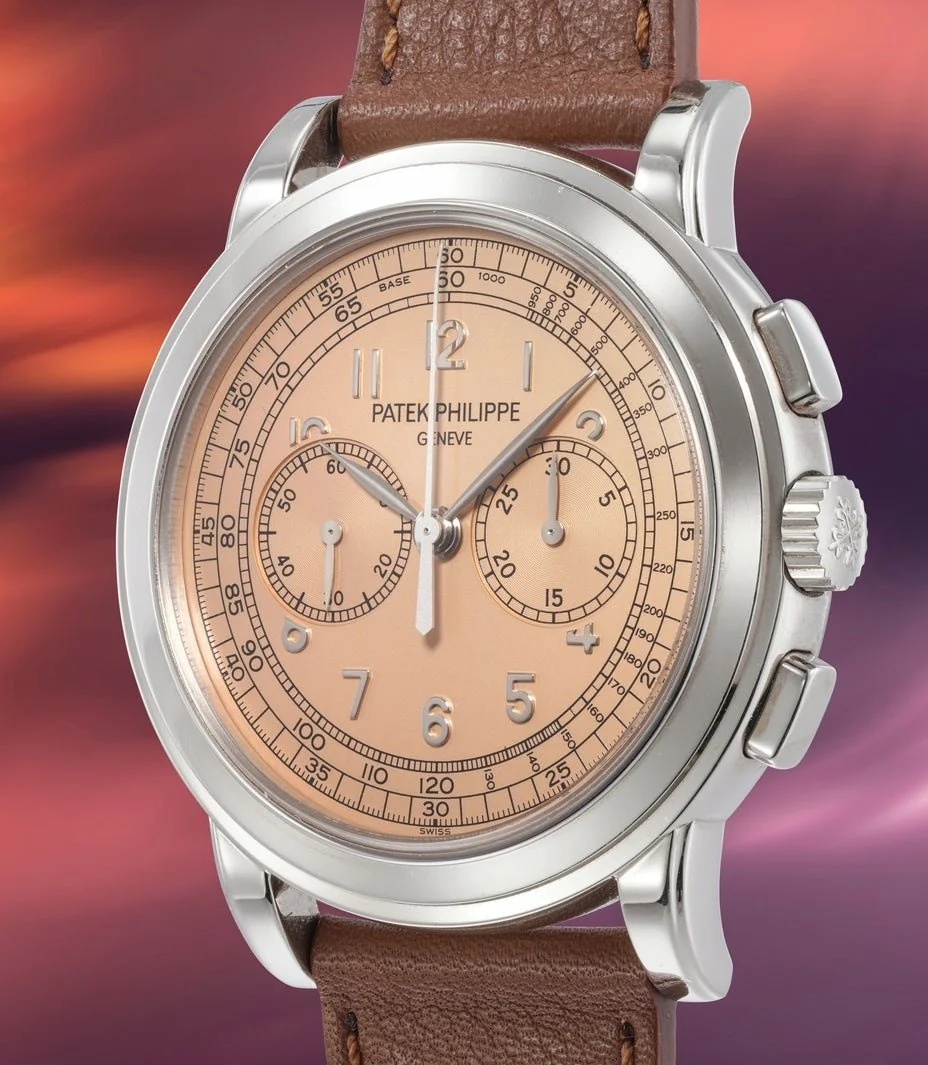
5070G-014
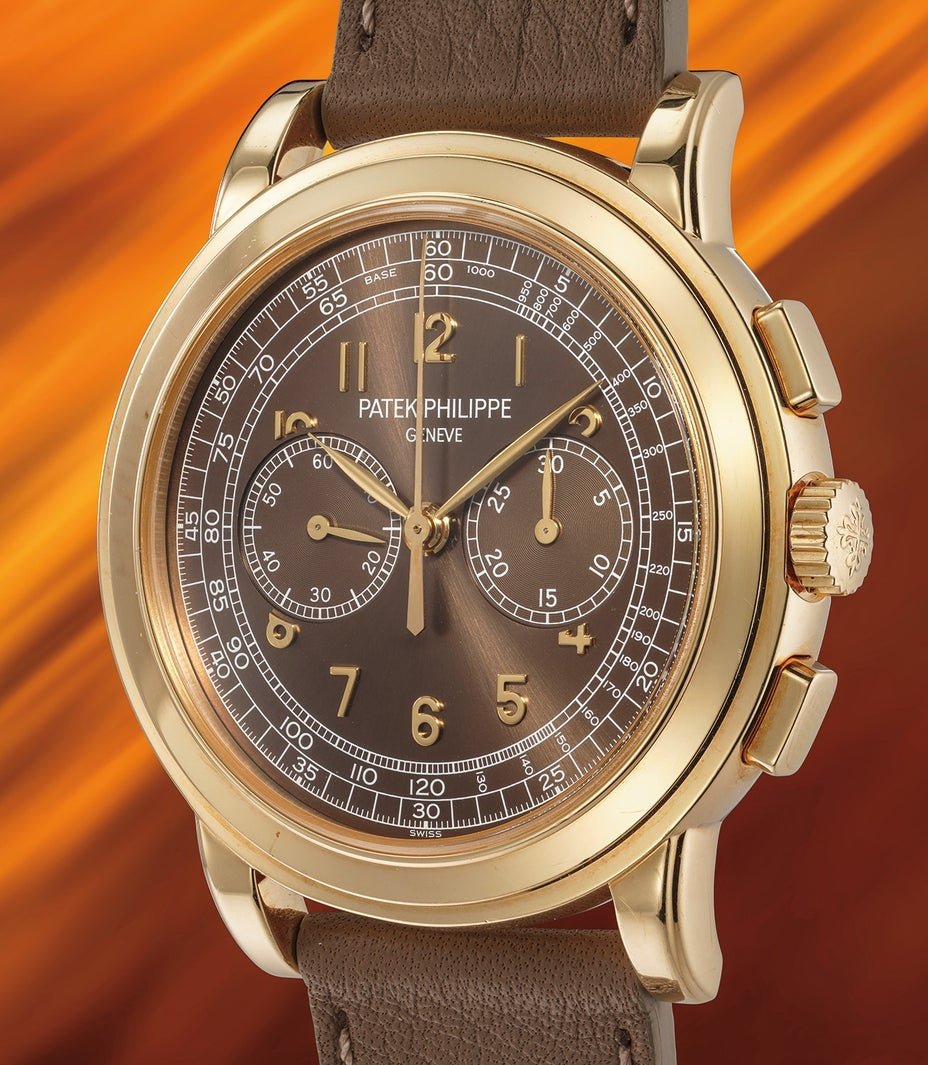
5070J-012
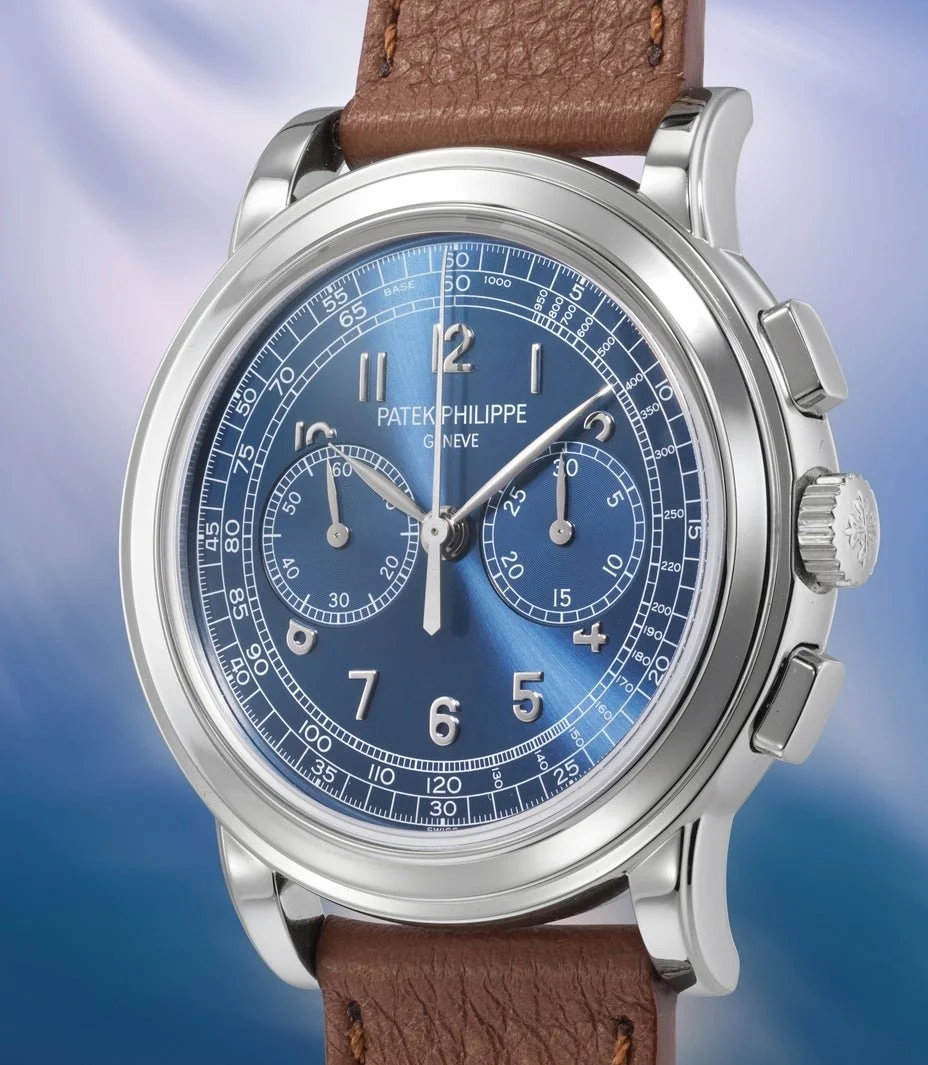
5070P-013
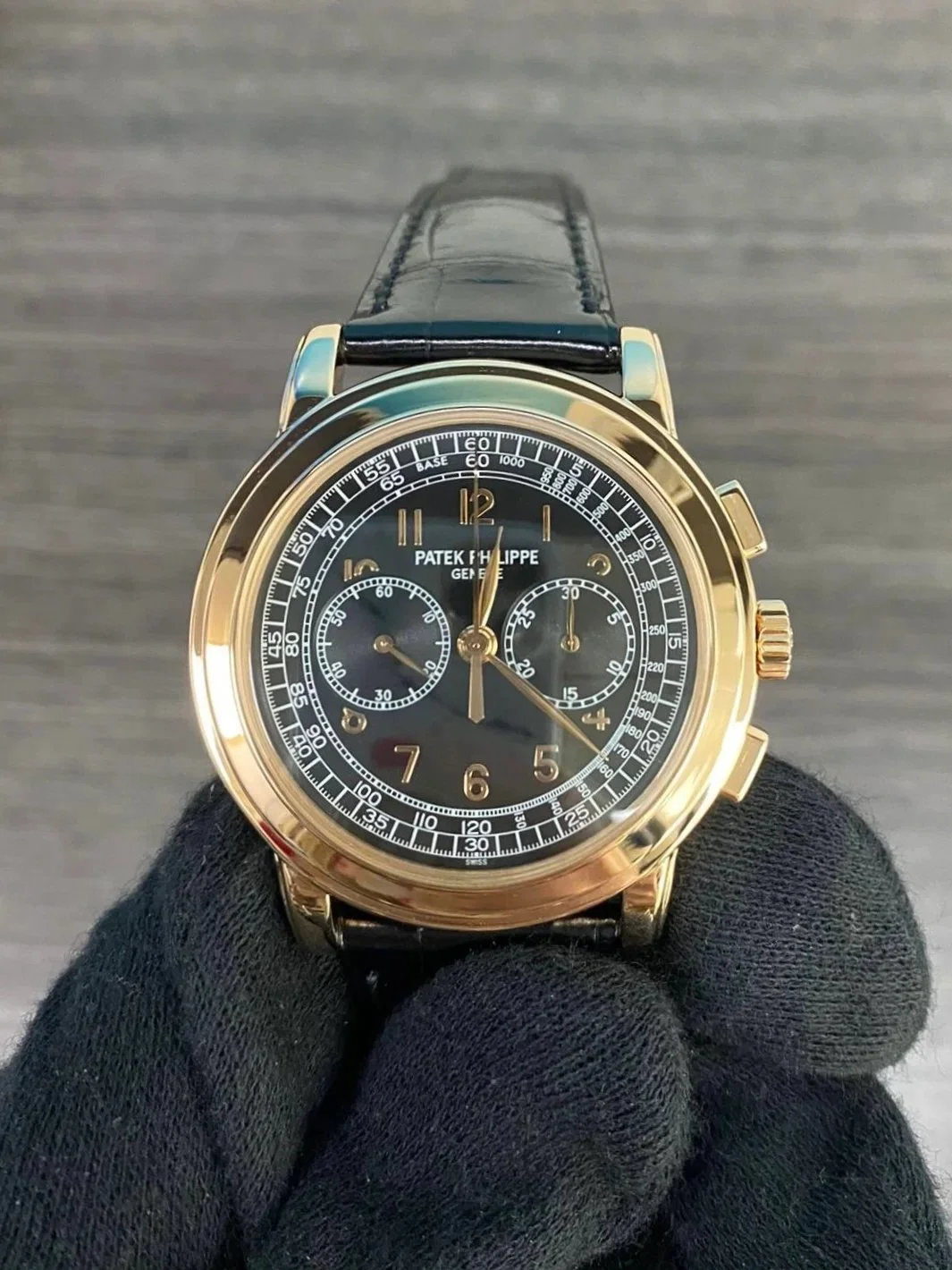
5070R-014
Reference 5070G-014 with salmon dial. The 5070 has become the best understood part of the Saatchi story, but dated examples show that the configuration was not confined to the 2015 exhibition. Source: www.phillips.com
5970G-019 and 5970J-014
With regular production ending by 2010, the Napoleon Room list brought it back in two very different combinations: the 5970G-019 in white gold with a salmon dial, and the 5970J-014 in yellow gold with brown.
Here the intervention is less about changing the architecture than on the 3970 given the more modern production date. The salmon dial gives the white-gold watch a completely different character from normal production, while the brown dial makes the yellow-gold version feel warmer and more unusual.
Sotheby’s has documented a 5970G-019 with a Certificate of Origin dated 6 January 2014 from the Geneva Boutique, before Saatchi. At the other end, Christie’s has catalogued a 5970J-014 from around 2020. These two watches alone place the same Saatchi-listed idea on both sides of the exhibition by several years.
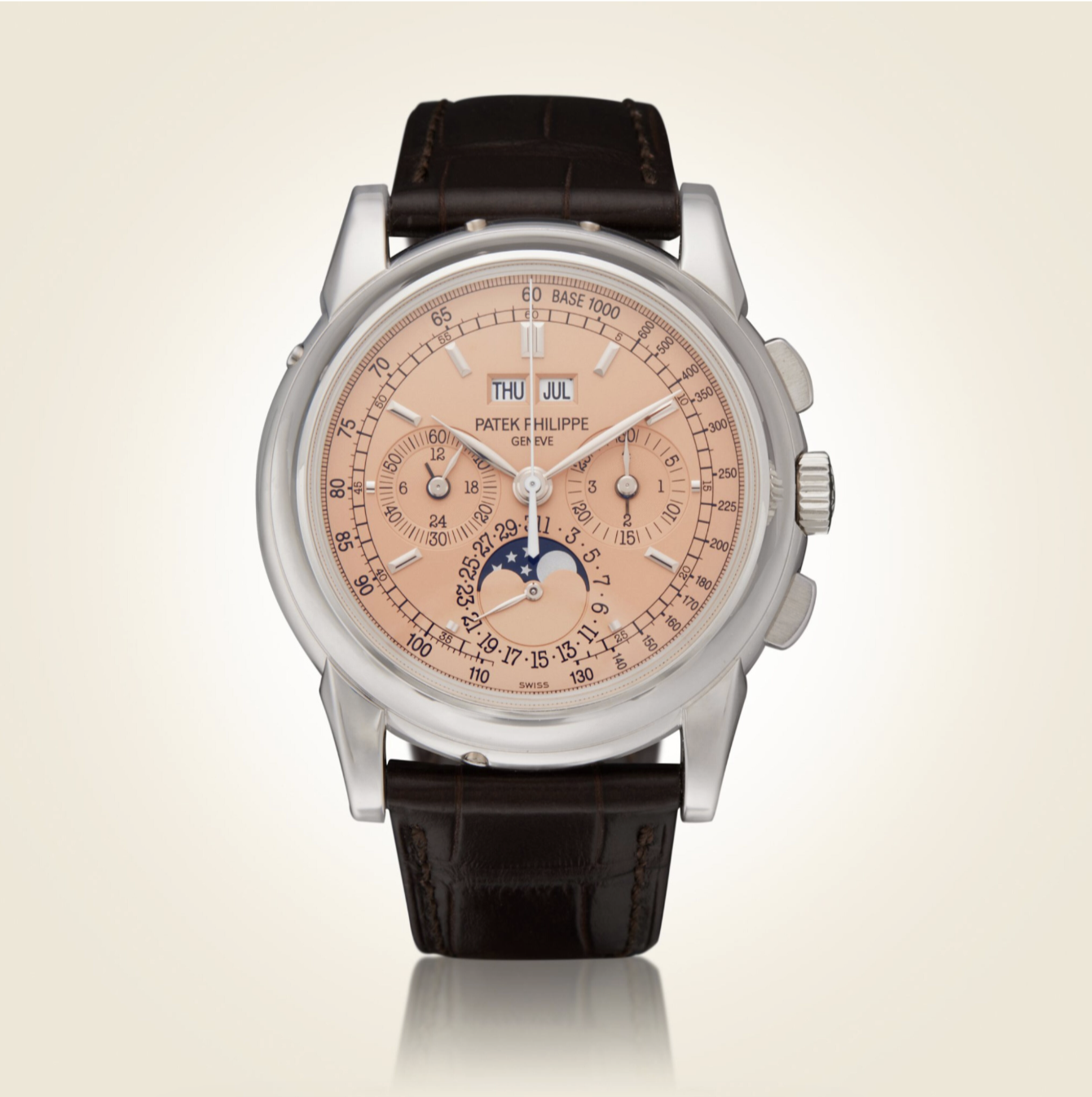
5970G-019

5970J-014
The two Saatchi-listed 5970 configurations: 5970G-019 in white gold with salmon dial (left) and 5970J-014 in yellow gold with brown dial (right).
5970G-019, 2014: https://www.sothebys.com
5970J-014, brown dial: https://www.christies.com
The less mapped references
The lower part of the Napoleon Room list is a reminder of how incomplete the research still is. References 5033P-011, 5951P-014, 5971/13P-011 and 6104/16-010 were all priced with the group, but several exact exhibition configurations have not yet surfaced.
Beyond the exhibition: the wider Vintage Collection
If London were the whole story, this would be a finite and relatively simple group. The watches that have surfaced since make that difficult to sustain. Patek continued to deliver some of the same Saatchi-listed configurations, sometimes years later, and it also produced other versions of discontinued references that never appeared on the London list.
This is where the collector term “Vintage Collection” becomes useful, provided it is not treated too rigidly. Most of the watches described that way are later than Saatchi, but 2014 examples show that the broader practice was already underway around the time of the exhibition. Saatchi looks less like the start of a new programme and more like the moment when Patek briefly allowed a selected part of this private production into public view.
Saatchi-listed configurations that continued later
The clearest evidence comes from watches whose suffixes appear on the 2015 list but whose own papers are much later. Phillips has documented separate 5059R-017s delivered through Boodles in 2017 and 2019. Christie’s documented a 5059P-018 with a Certificate of Origin dated 2021. The 5970J-014 has appeared with a circa-2020 date (links at the bottom of the article we can link them), while Kinsmen has archived a 3940R-027 dated to circa 2021. These are not mistakes in classification. They are the point: a Saatchi-listed configuration could continue long after Saatchi.
Non-Saatchi Vintage Collection watches
The watches that never appeared on the London list are, in some ways, the more interesting part of the story. They show that Patek was not simply producing extra examples of what had been shown in 2015. New combinations continued to appear across references and metals, often years after normal catalogue production had ended.
The 3940 is currently one of the most desirable complicated watches in Patek’s catalogue, and the blue-dialled 3940P-027 is one of the best known and perhaps most desirable of all. Gary Getz first saw his example in 2017 and collected it from the Geneva Salon in 2018. It does not appear on the Saatchi list.
Interestingly other references have begun to surface, the black-dial yellow-gold 3940J-028 is another striking example: Phillips sold a 2020 watch in May 2026.
The 3940 is a particularly interesting case. Although the reference was represented at Saatchi, the platinum and yellow-gold Vintage Collection variants only surfaced later
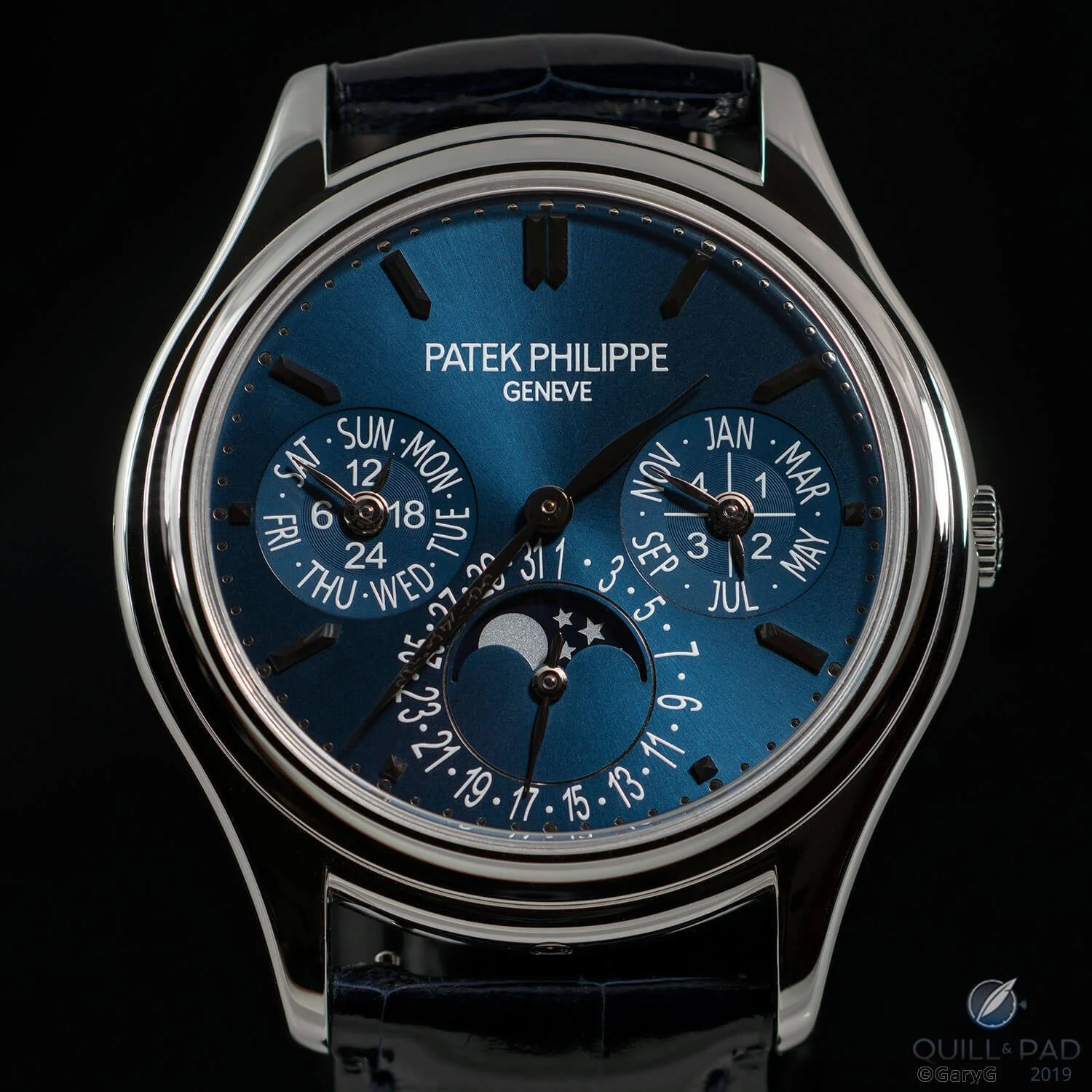
3940P-027
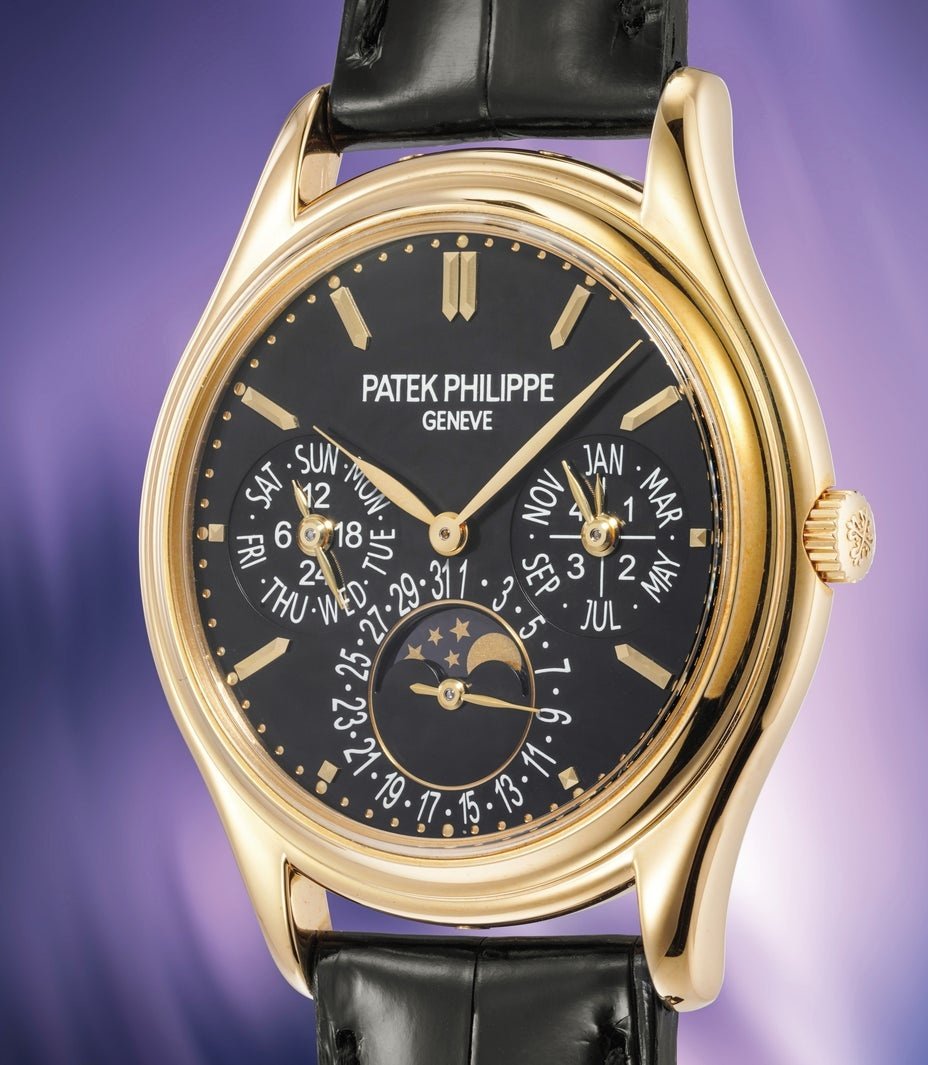
3940J-028
Reference 3940J-028, black dial, yellow gold, dated 2020. A later non-Saatchi example and one of the clearest recent signs that the market is beginning to understand the wider group. Source: www.phillips.com
3940P-027: GaryG / https://quillandpad.com
Interestingly, European Watch Company has documented both a salmon-dialled 5041G-022 and a blue-dialled 5041G-023 with papers dated September 2014, more than a decade after ordinary production of the reference. They sit naturally within the same wider story: obscure discontinued references being revisited with completely new dials around the period that culminated publicly at Saatchi.
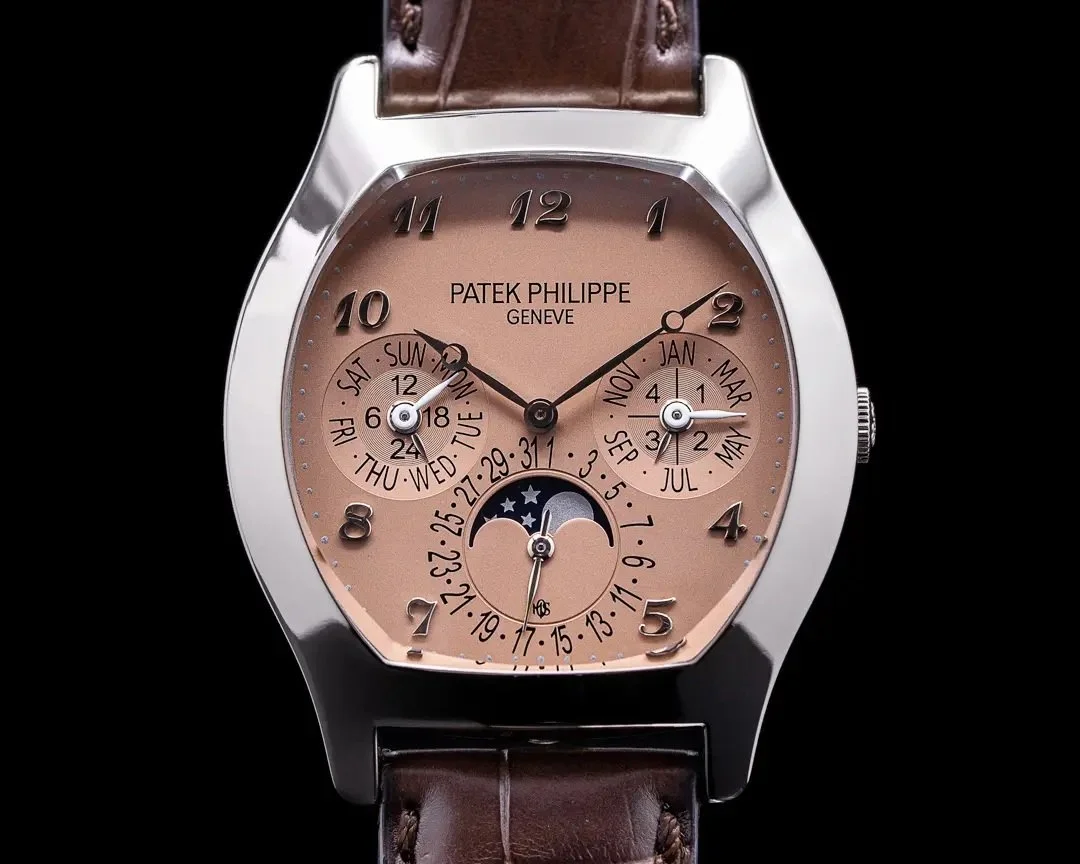
5041G-022
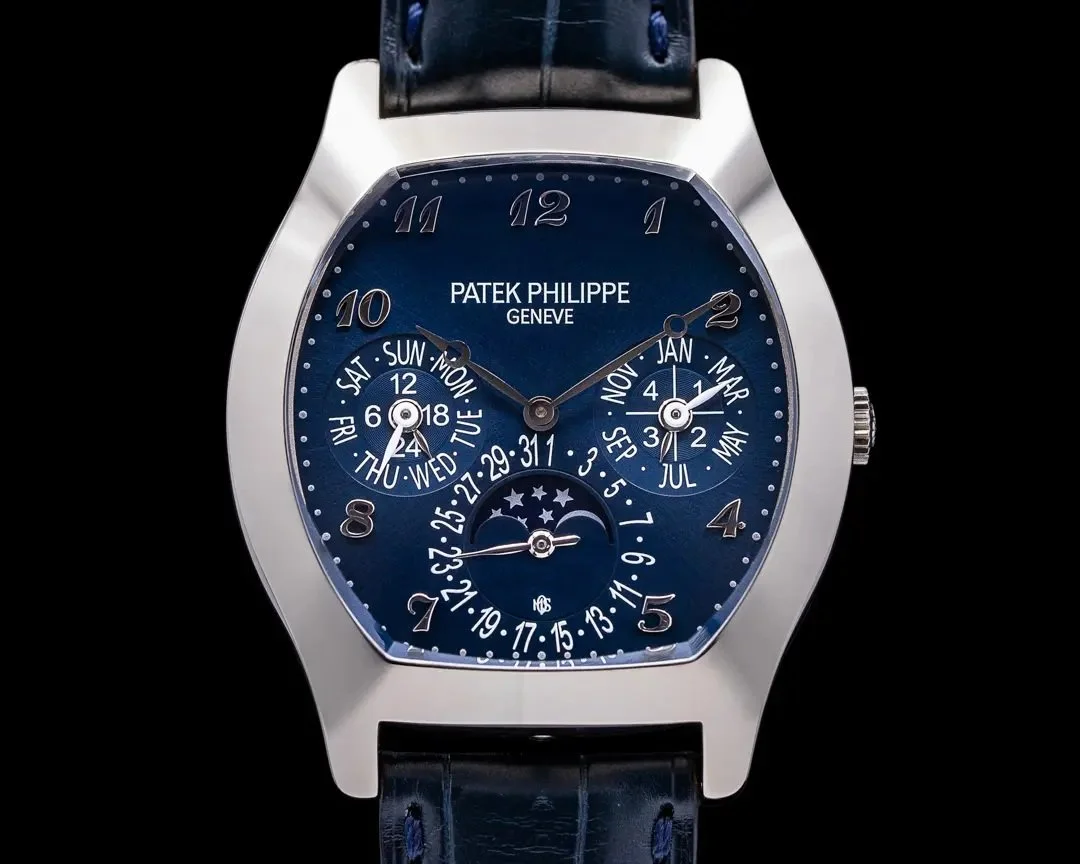
5041G-023
Two non-Saatchi examples from very different points in the timeline: the salmon 5041G-022 with September 2014 papers, and the blue 5041G-023 also 2014. Sources: European Watch Company.
5041G-022: https://www.europeanwatch.com
5041G-023: https://www.europeanwatch.com
The 5039 pushes the same ideas, with the 5039G-013 produced with a blue dial, example delivered in 2019, and a 5039R-014 also appearing at auction with a brown dial. A black-dial 5039J-019 gives another glimpse of how broad the non-Saatchi group may be.
5039J-019
5039G-013
5039R-014
5039J-019, author’s watch, @watchdilettante (Alex)
5039G-013: https://www.sothebys.com
5039R-014: https://www.sothebys.com
The 5038 has also been seen with a salmon dial, interestingly the dial features raised white-gold Roman vs standard black dials with white printed numerals found on the original. It is a small but very clear example of the wider design point running through this group: Patek was changing the specification of the dial, not merely its colour.
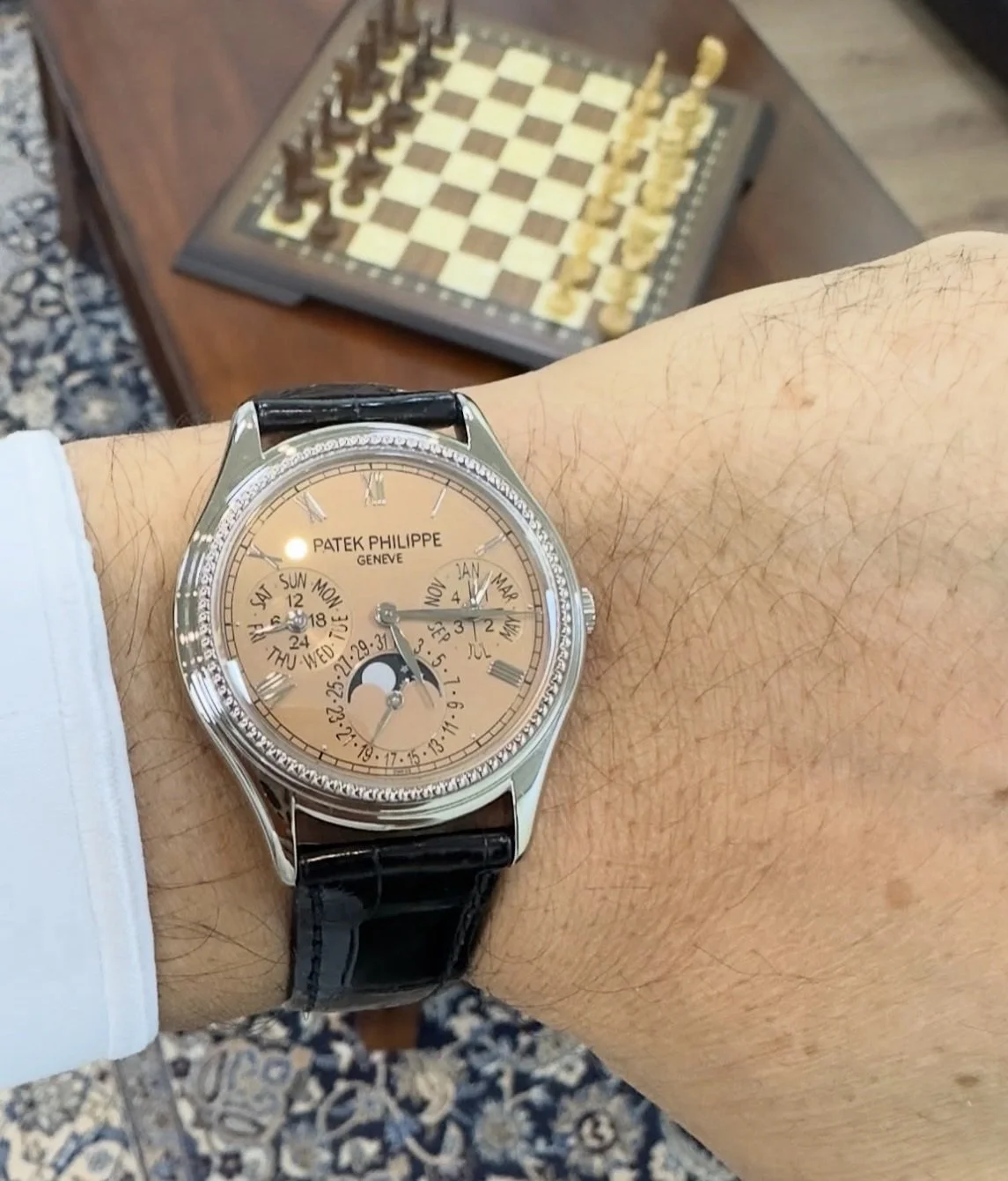
5038
5038
Salmon-dial white-gold 5038 with raised white-gold Roman numerals, photographed by Patekcollector.
5038 photograph: Patekcollector / Instagram: https://www.instagram.com
The 5050: a more complicated case…
The 5050 becomes more interesting once we move beyond the Saatchi list. The Napoleon Room price list records 5050J-019, but that suffix is already firmly documented on normal-production watches with the familiar silvered dial, baton indexes and leaf hands. The watch shown below left is a normal-production example from 2004. That makes the London entry difficult to take at face value and is one reason the Saatchi 5050 remains unresolved.
Two other yellow-gold 5050 suffixes are much more obviously special. The 5050J-023 has a slate-grey dial with applied Breguet numerals, while the 5050J-024 uses the same broad treatment on black. Both also move away from the normal 5050's leaf hands to open Breguet-style hands. In the sequence of watches covered in this guide, these are the first to break from the leaf-hand treatment that otherwise runs through the Saatchi and Vintage Collection pieces. That probably makes sense: the ordinary 5050 already had leaf hands, so changing the handset as well as the numerals was a much clearer way of making the special watch look different.
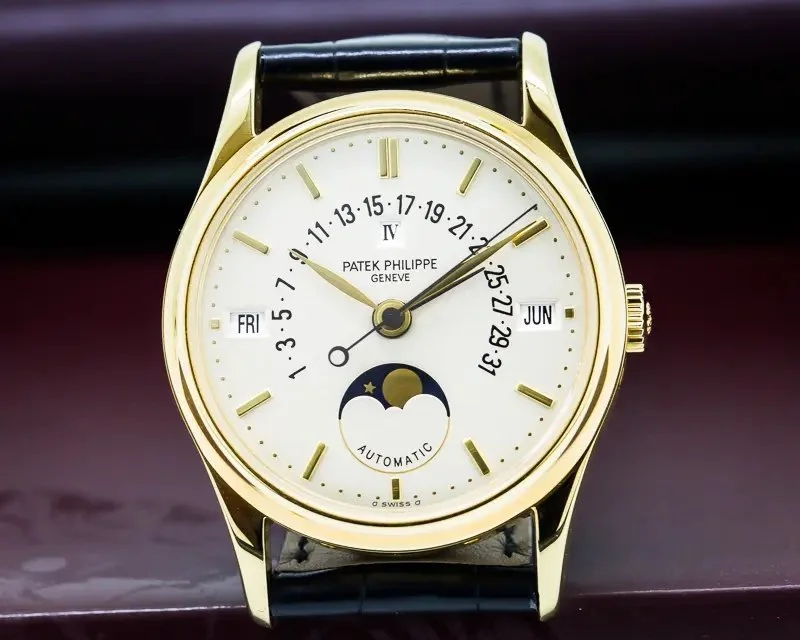
5050J-019
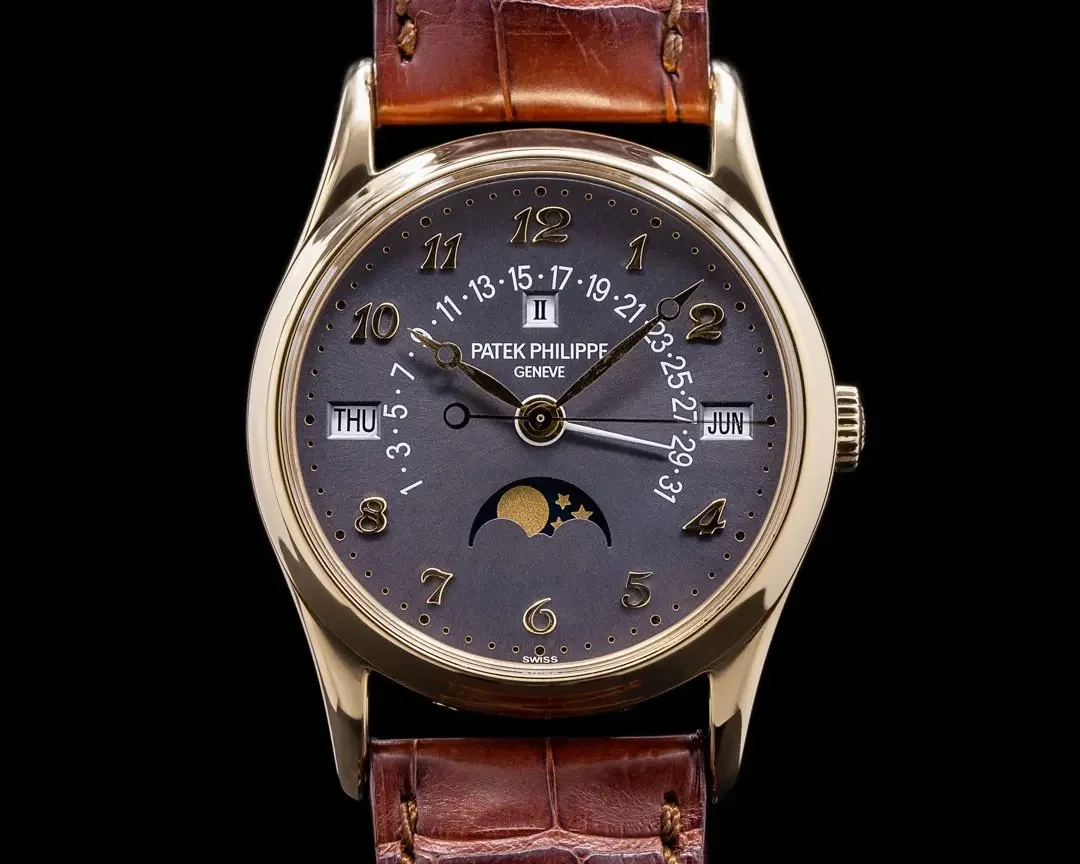
5050J-023
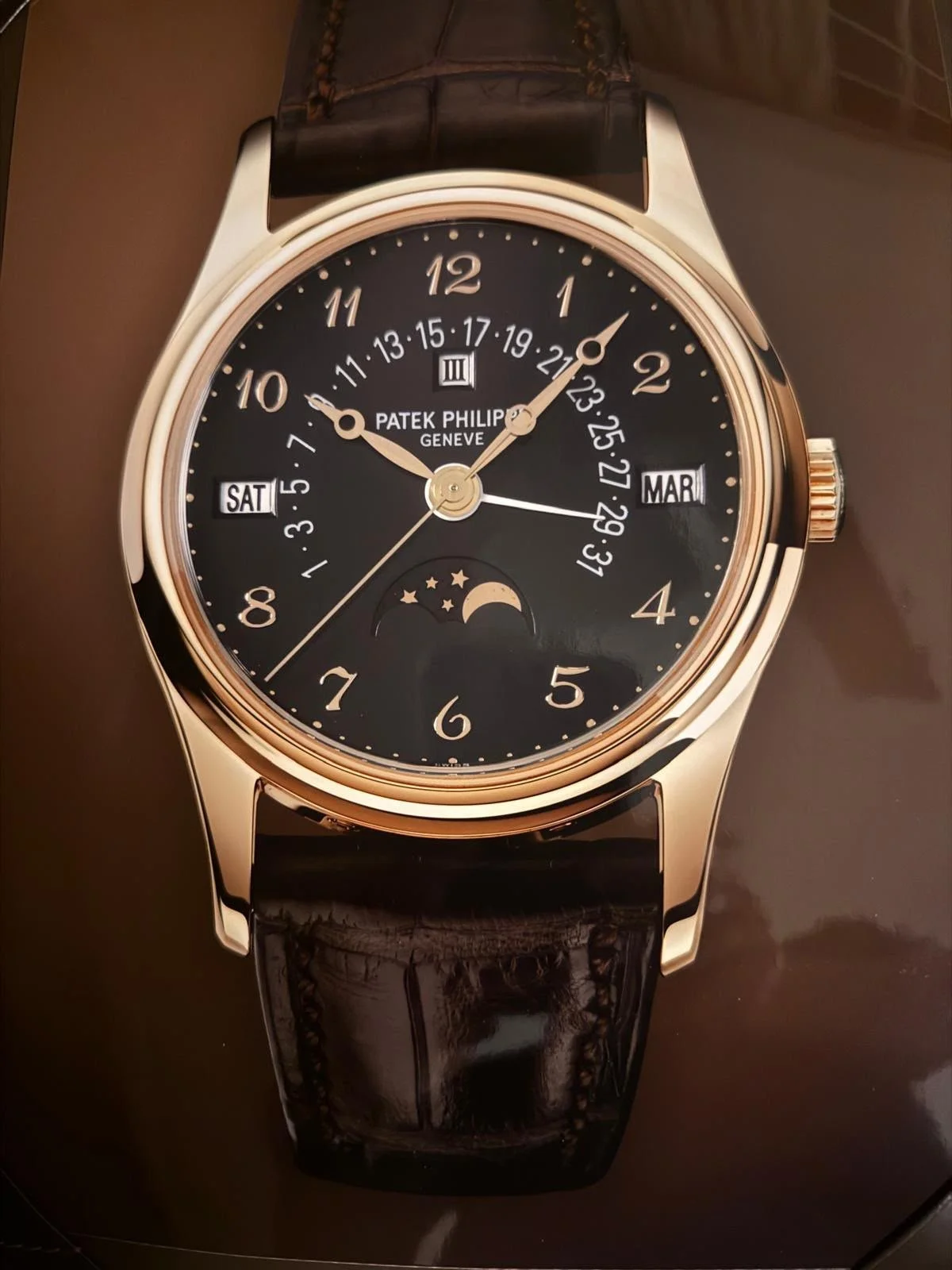
5050J-024
Normal-production 5050J-019, with silvered dial, baton indexes and leaf hands: https://www.europeanwatch.com
5050J-023, with slate-grey dial and Breguet treatment: https://www.europeanwatch.com
5050J-024 (right), with black dial, applied Breguet numerals and open Breguet-style hands. Malcolm Gillan
The other unusual feature is that both known special configurations are yellow gold. Elsewhere in this group, dial colours often map quite neatly across different metals. The 5050 does something different: at least two materially different special dials in the same metal. That makes it a particularly useful example of why the wider Vintage Collection story cannot be reduced to a simple one-metal, one-dial formula.
These examples were treated as special watches in their presentation as well. The J-023 and J-024 have appeared with extensive full sets including the Certificate of Origin, additional solid caseback, setting pin, literature, leather portfolio and winding box, together with the individual-watch photograph treatment seen elsewhere across this group.
The 5050 remains one of the more intriguing references in this story. Two different special yellow-gold dial codes have surfaced but no other metal, which breaks from the usual playbook, the Saatchi entry itself remains unresolved. If anyone has photographs, certificates or further information on other 5050 variants, we'd love to hear from you.
Are the non-Saatchi watches rarer?
There is a reasonable inference from the chronology that the non-Saatchi configurations are likely, although not provably, to have been made in smaller numbers individually than many of the best-known Saatchi watches. They generally appear later and therefore had a shorter potential production window. More importantly, there is no obvious reason Patek would have produced every reference or dial in equal quantities.
Demand probably mattered. Saatchi put a selection of these revived watches in front of clients. If a particular configuration proved popular, Patek could make further examples. That would fit the repeated later appearances of some of the better-known 3940, 5070 and 5970 combinations. The reverse is equally plausible. If an obscure 5038, 5039 or 5041 attracted less demand, there would have been little reason to keep producing it once the initial watches had been placed.
If that interpretation is right, some of the least celebrated watches may ultimately prove to be the rarest.
There was precedent
Saatchi did not come from nowhere. Patek had already shown that it was willing to revisit discontinued references and create very different versions of existing watches for important clients and special occasions.
The clearest earlier example is the group of 3970s made for the reopening of Patek Philippe’s Geneva Salon in 2006. Normal production of the 3970 had already ended, yet Patek produced four watches, one in each principal metal, with completely different full-Breguet-numeral dials. These are not Vintage Collection watches, but they show that bringing back a discontinued reference with a new dial was already something Patek was prepared to do. Christie’s brought a complete group back to market in 2025, with the platinum example alone selling for CHF1.397 million.
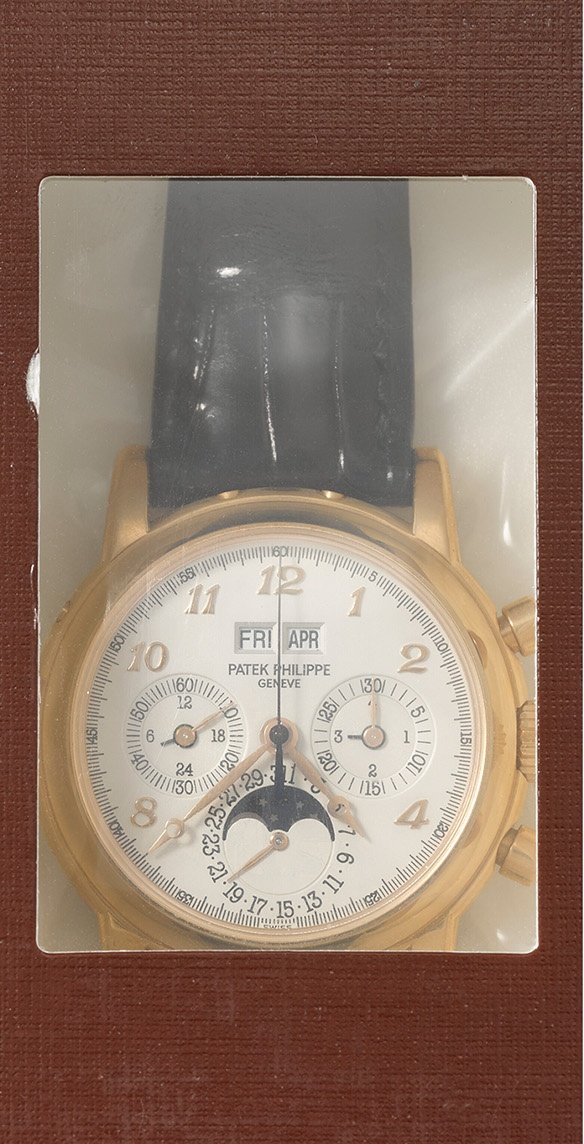
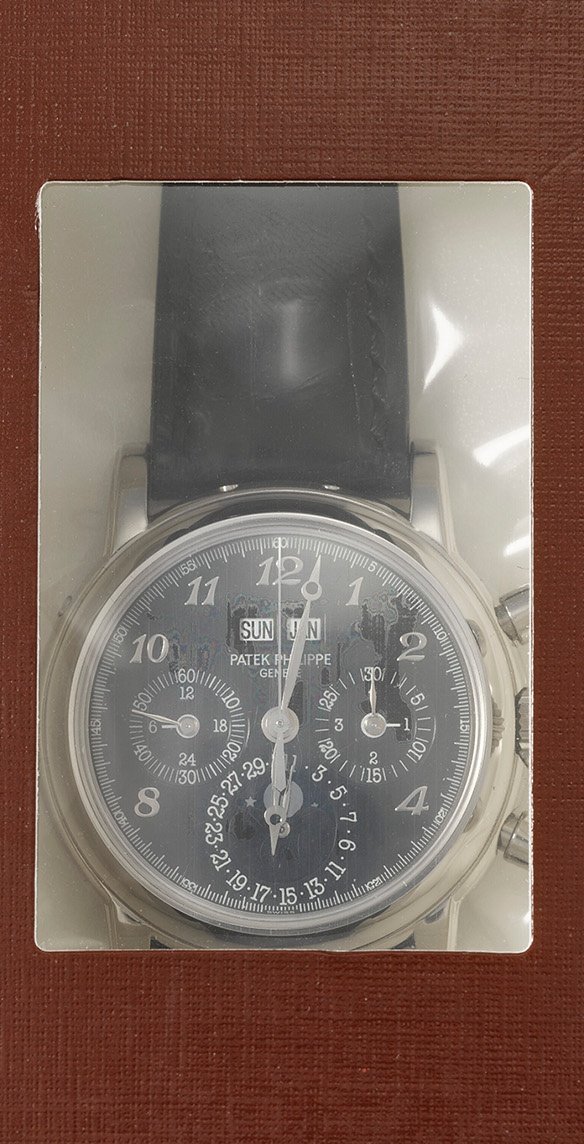
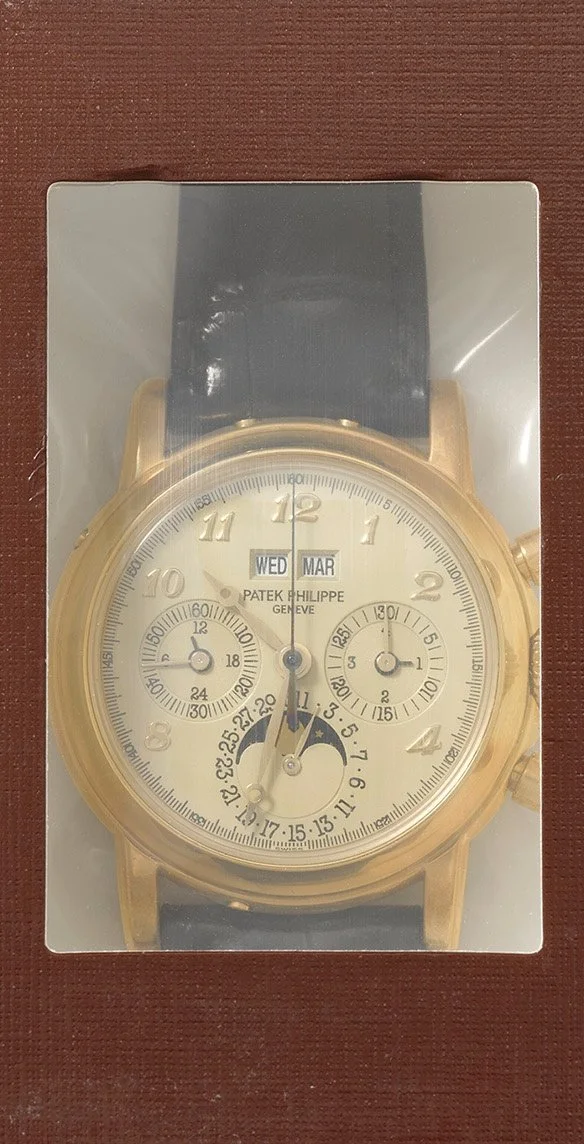
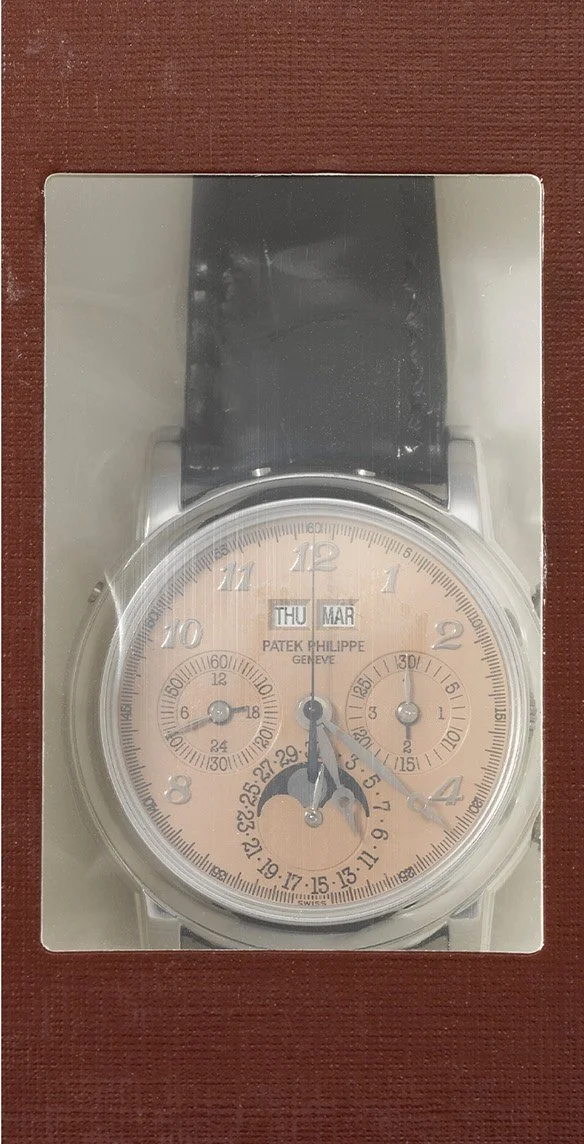
The 5004 provides an even closer design precedent. In 2008 Philippe Stern reportedly asked Stern Creations to produce a small number of special dial sets for the reference, using different colours together with details such as tachymeter and pulsation scales. Christie’s records around twelve sets being produced for important clients. These watches were made towards the end of normal 5004 production rather than years after it, so they sit outside the Vintage Collection as we define it here. The design language, however, is very familiar: unusual colours, a single Roman or Breguet numeral at 12, dot markers and large outer scales, all used to make an established reference look quite different from the standard watch.

5004J special champagne tachymeter dial: Christie’s
Individual commissions take this further. Eric Clapton’s special 3970s and 5004s used the same sort of tachymeter dials and single Breguet 12.
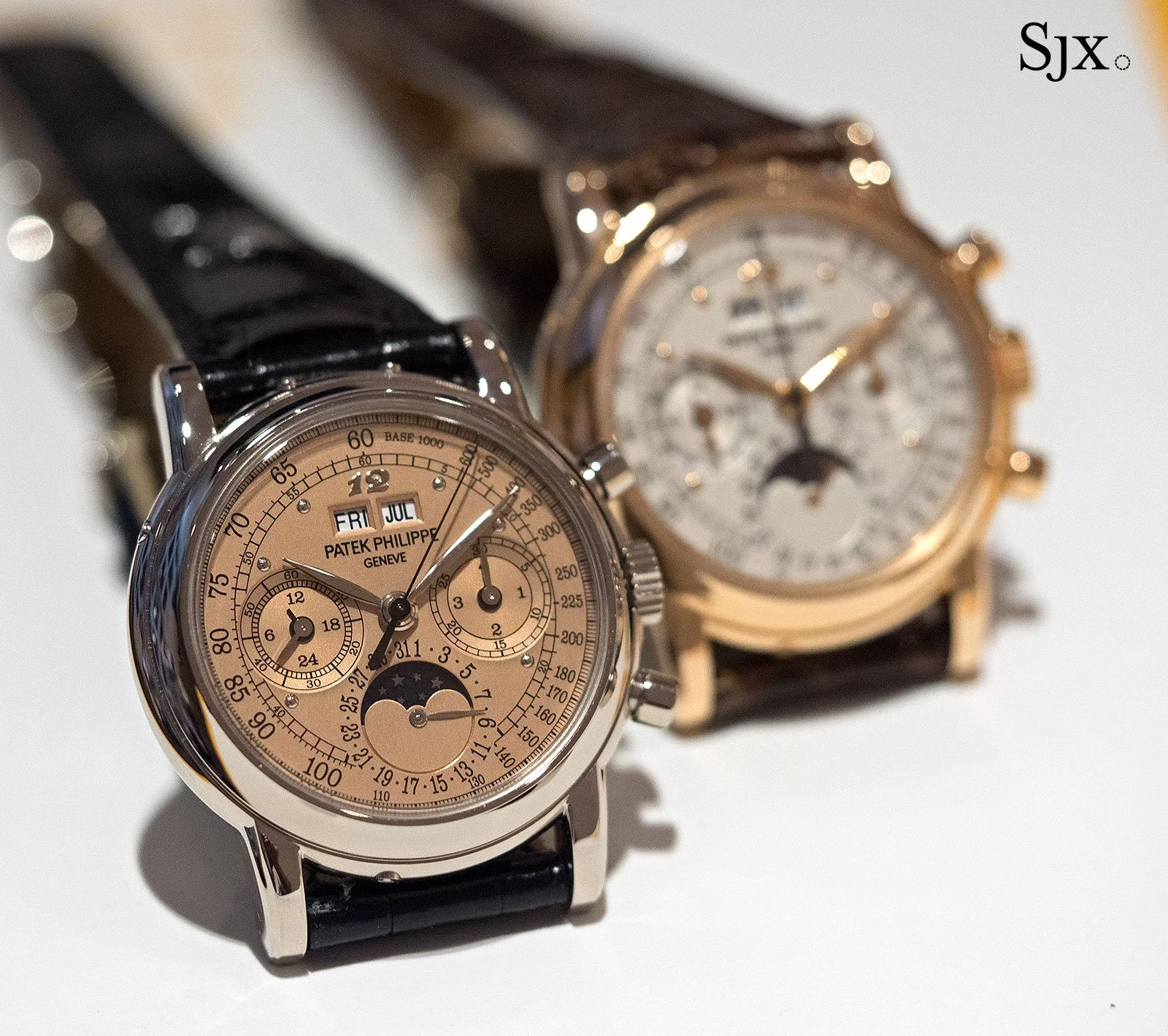
Eric Clapton’s 3970’s: Watches By SJX
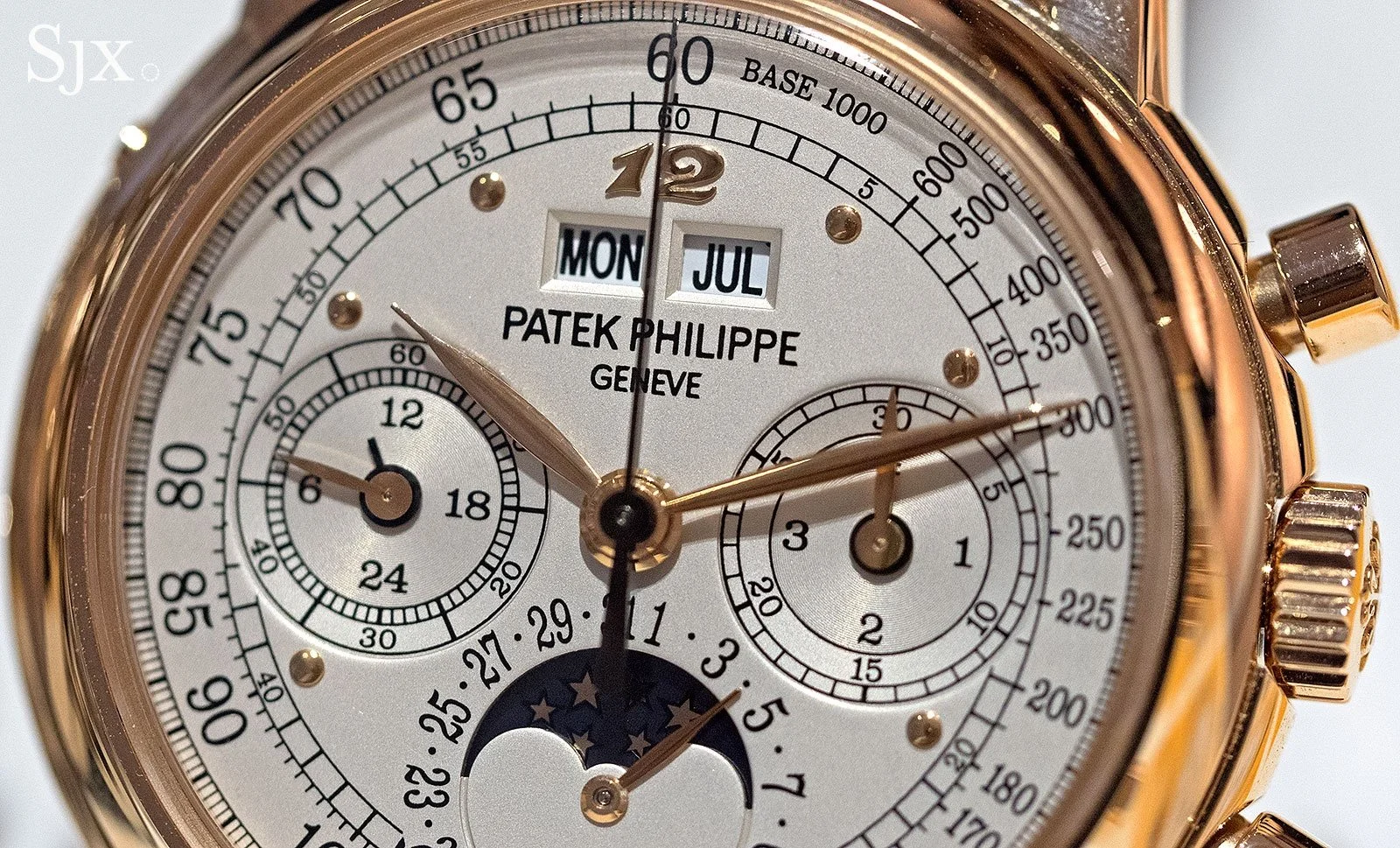
Eric Clapton’s 3970’s: Watches By SJX
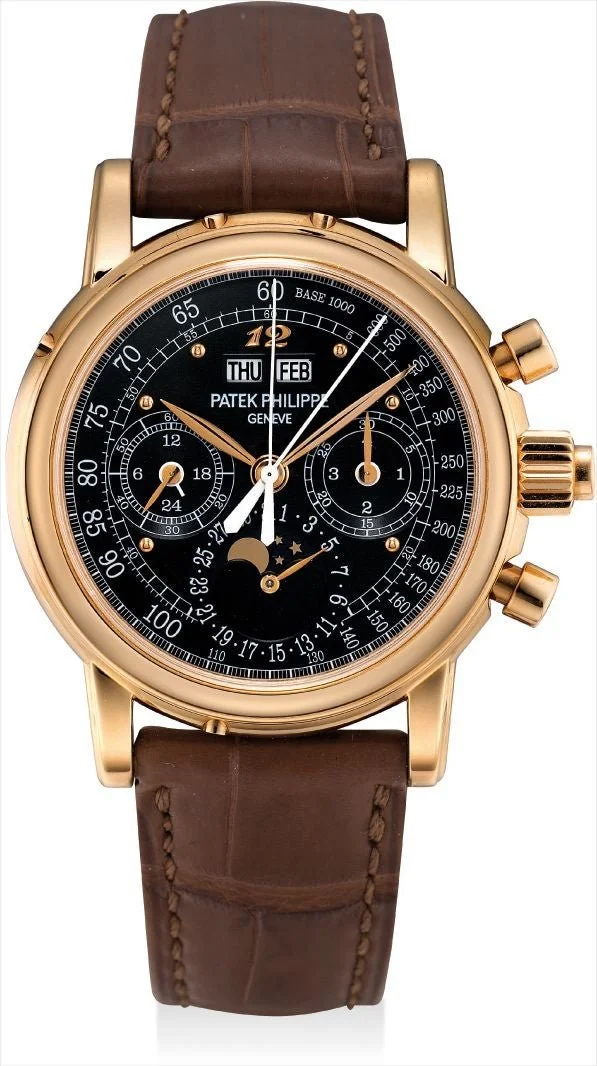
Eric Clapton’s 5004: Phillips
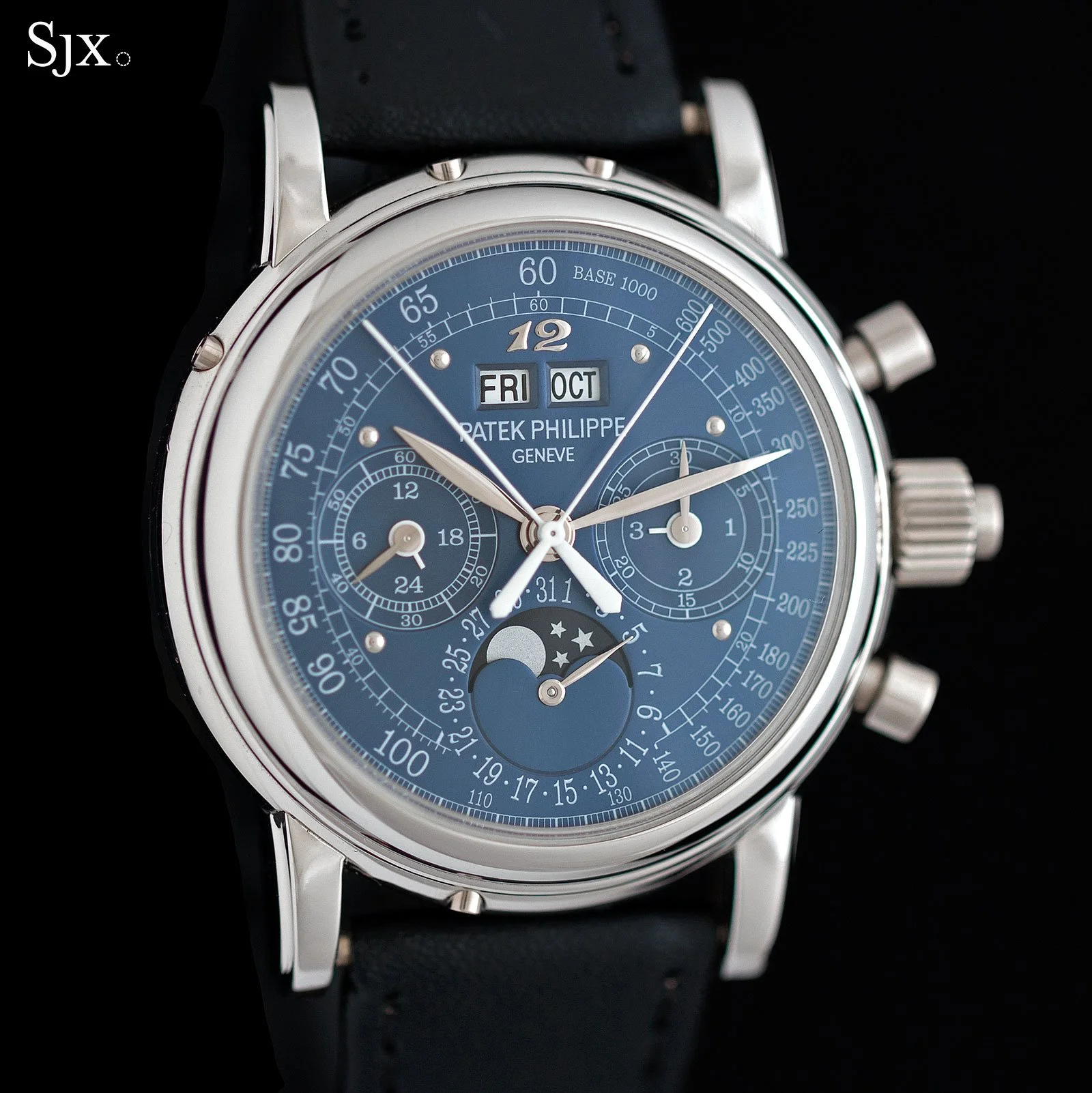
Eric Clapton’s 5004 :Watches By SJX
Michael Ovitz’s watches added luminous hands and markers and his discreet M.S.O. signature. These remain personal commissions rather than Vintage Collection pieces, but they show that much of the visual language that later appears around Saatchi was already established.
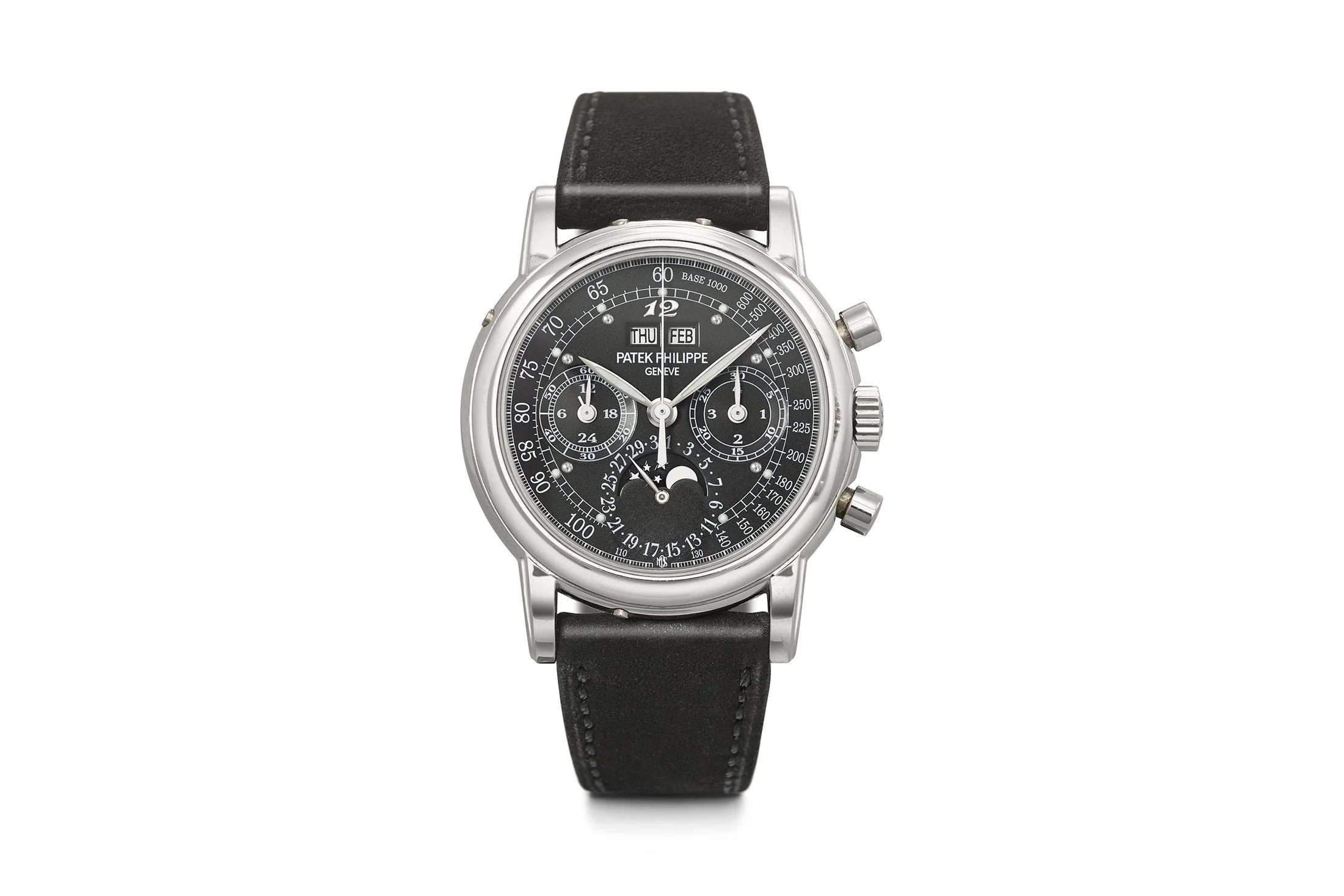
Michael Ovitz discreet M.S.O. signature
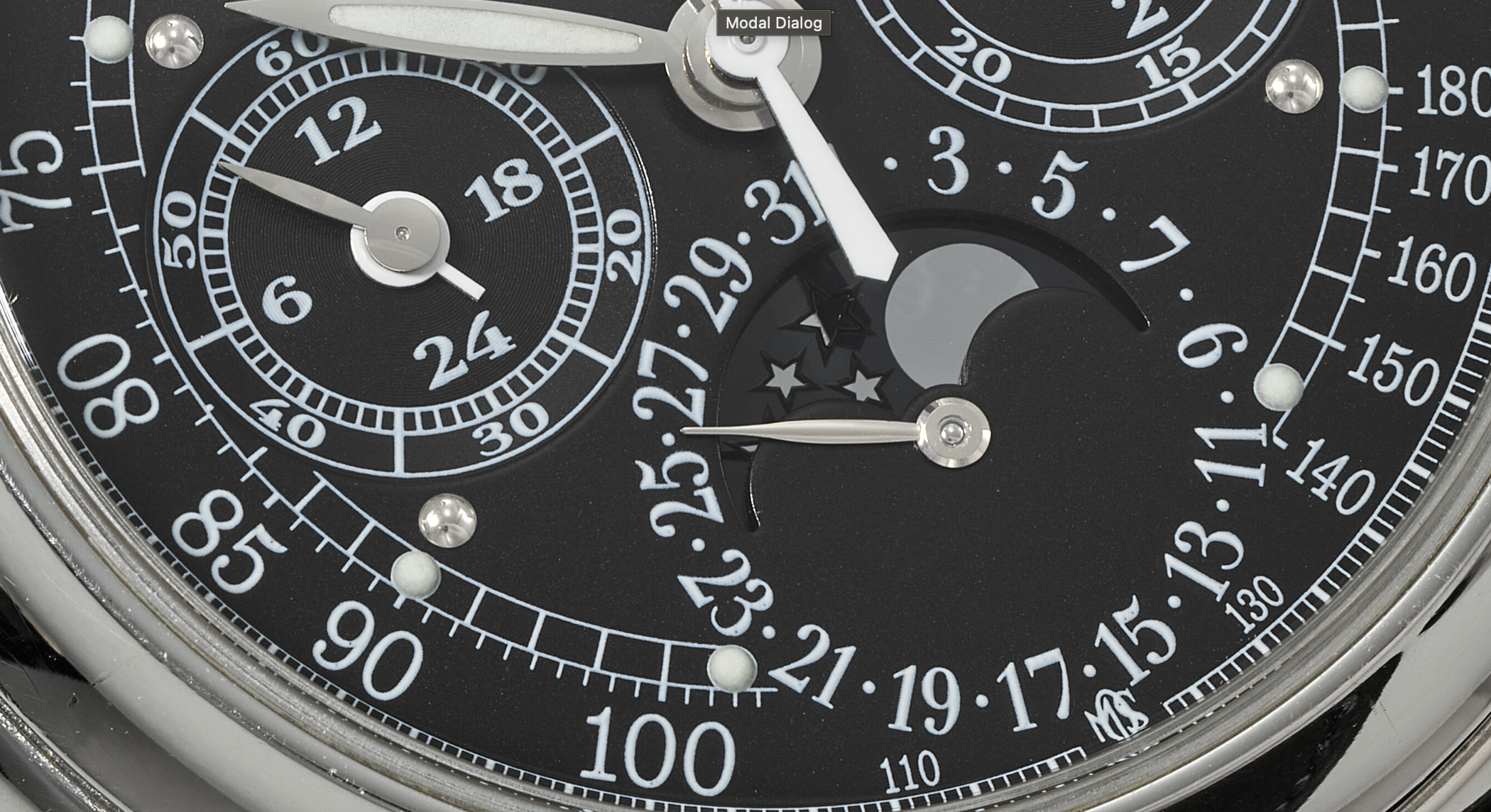
Michael Ovitz discreet M.S.O. signature
Correcting often cited incorrect information
The dials: reinterpretation, not reused
The dial design is one of the strongest threads across the group. Patek was not simply bringing an old case back and changing the colour. The treatment varies by reference, but the common idea is clear: take a familiar discontinued watch and change enough of the dial language to make it feel different from the version collectors already knew.
The 3940 and the “5140 dial” myth
The special 3940s are often described as 3940s fitted with 5140 dials. That is convenient shorthand, but it is wrong. The watches clearly borrow the design language of the 5140, particularly the larger typography and more contemporary treatment of the perpetual-calendar indications, but the physical dial is demonstrably different.
The simplest proof is visual. Compare the blue 3940P-027 with a blue 5140P and look at the applied markers at 3 and 9 o’clock and the difference is obvious. The 3940 uses short, compact pyramid-like markers. The 5140 uses longer pointed rectangular markers. The minute track runs through 6 o’clock on the 3940 while its interrupted by ‘SWISS’ on the 5140.
The proportions are also different because the 3940 is the smaller watch. Patek adapted the later design language to the older reference; it did not transplant the same dial.
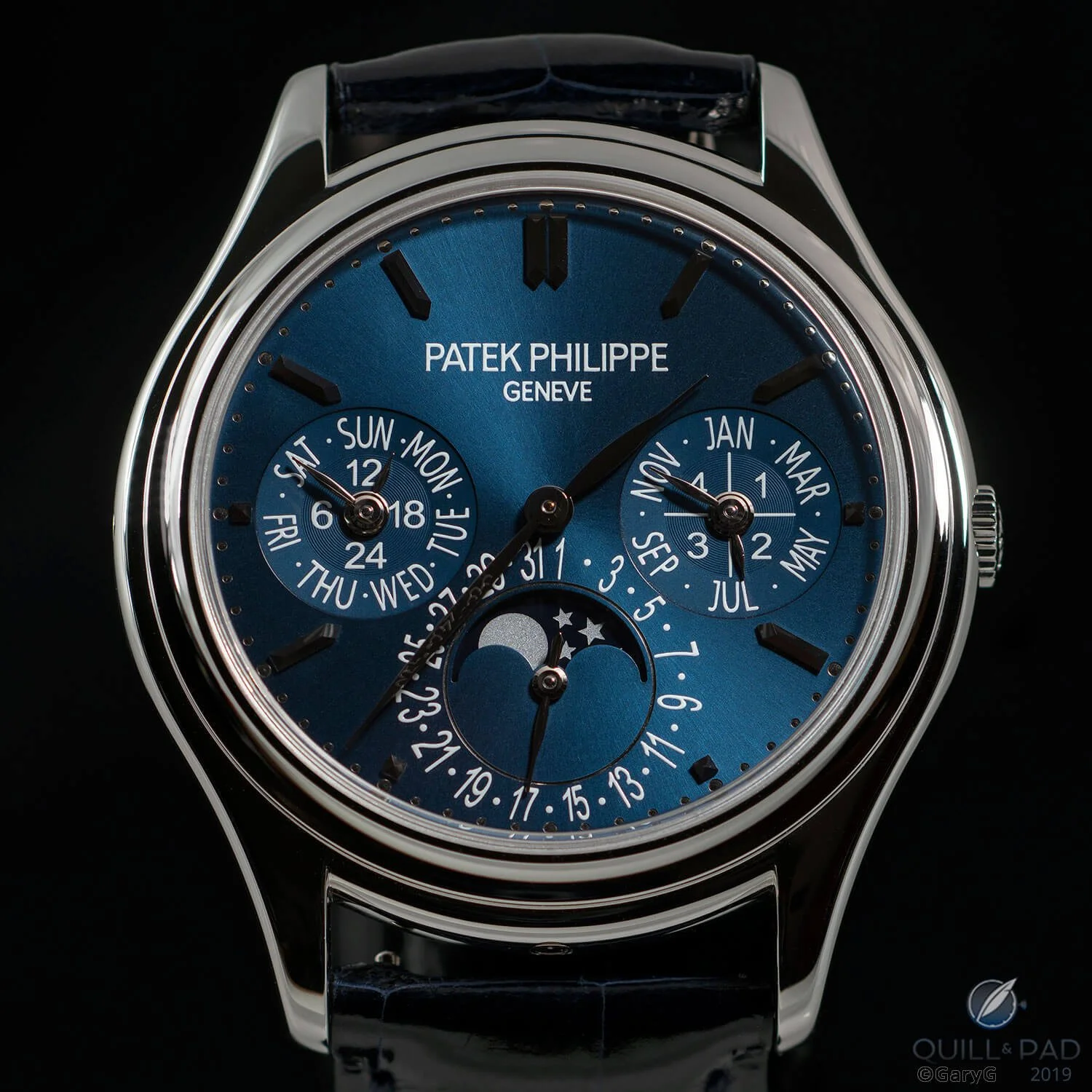
3940P-027
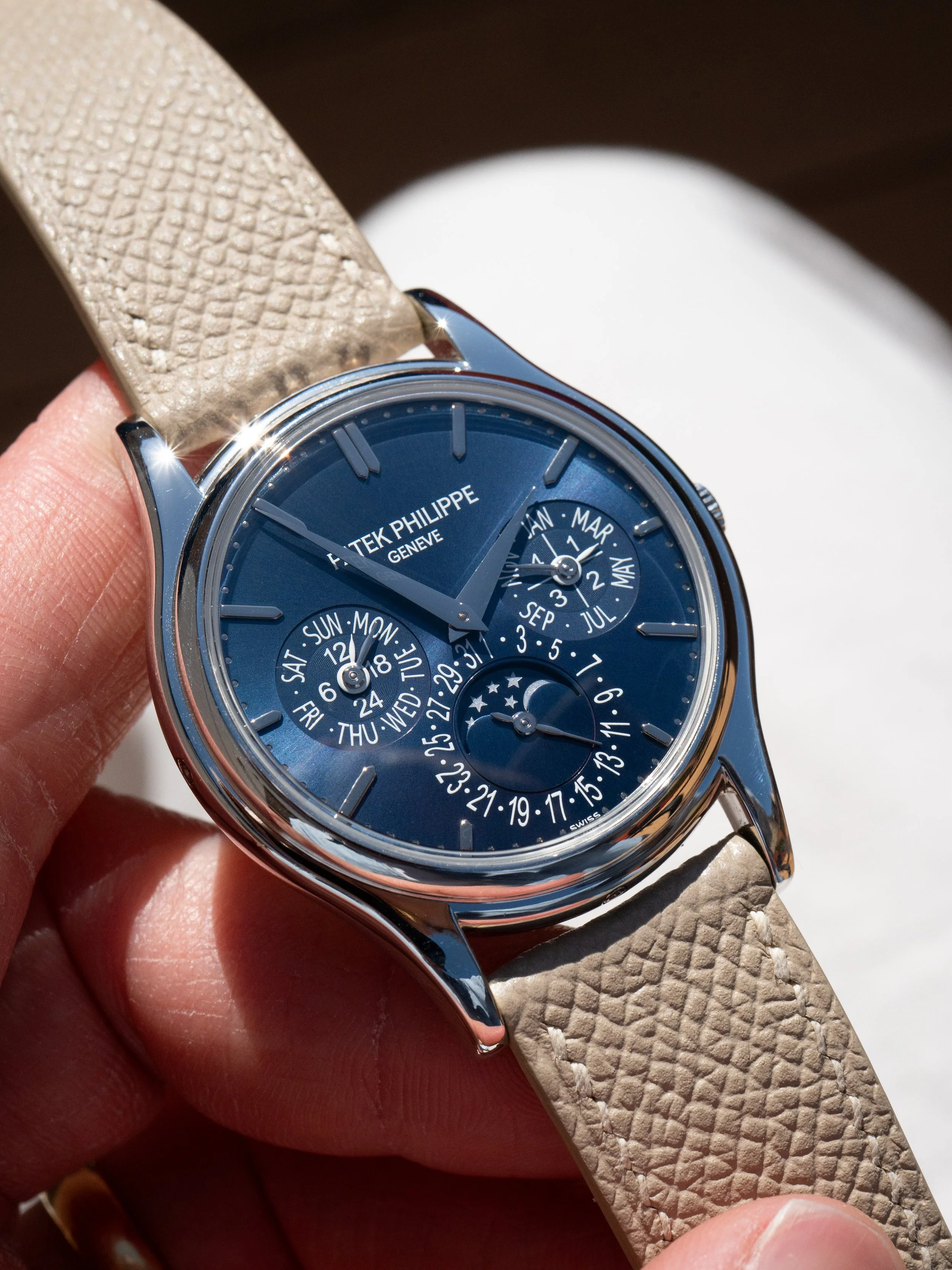
5140P
The shared colour and graphic language make the differences easier to see. The 3 and 9 o’clock markers are the clearest visual proof that these are different dials. Sources: GaryG / Quill & Pad; WBLDN.
That distinction matters because the “5140 dial in a 3940” description has been repeated often enough to become accepted wisdom. The better description is simpler: Patek used 5140-derived design language on a new dial made for the 3940.
The “one of five” story
“One of five” has become one of the most repeated claims surrounding these watches. It appears in auction catalogues, dealer descriptions and collector discussion because it gives a secretive group a satisfyingly precise production story. What has never surfaced is a public Patek Philippe production record showing that five was a rule across the collection.
The most useful challenge comes from Collectability’s detailed study of the reference 5070. It notes the familiar rumour that only five of each special 5070 configuration were produced, but concludes that the actual number is “certainly” somewhat higher. The same research records 5070s sold before the 2015 exhibition and others as late as 2019-20, and points out that Patek has never disclosed the production figures.
That does not mean five must be wrong for every configuration. It may prove correct for some watches, or perhaps for an initial run. What looks increasingly difficult to defend is the idea that Patek made exactly five of every configuration and then stopped.
Was production shaped by demand?
A more plausible working explanation is that production varied by reference and dial. Patek may have prepared a small number of watches and then produced more where there was sufficient client demand. The popular configurations appear repeatedly, sometimes with certificates several years apart, while other references are barely seen at all.
There is little reason to assume that demand for a 5070 or 3940 was identical to demand for a 5038, 5039 or 5041, or that Patek would continue producing an unpopular configuration simply to reach an arbitrary number. If this interpretation is right, rarity may have more to do with client demand and the appeal of the individual configuration than with a single production formula.
This remains an inference. It is also one of the areas where a growing census of movement numbers, case numbers and original certificates should eventually replace speculation with something more measurable.
Collectability 5070 research: https://collectability.com/learn/a-collectors-guide-to-the-patek-philippe-ref-5070-chronograph/
Re-usued NOS old movements, later watches?
The movements provide another warning against imposing too neat a chronology on these watches. Delivery date, case age and movement generation do not always line up. The evidence is now strong enough that this is more than a curiosity seen in one or two examples.
The clearest comparison is the blue 5059P-018. A circa-2015 example documented by Christie’s contains the later calibre 324 S QR and bears the Patek Philippe Seal. Another 5059P-018, with a Certificate of Origin dated 2021, contains the older calibre 315 S QR and bears the Geneva Seal. Christie’s dates that movement to around 2005 and describes the case as made new in 2021. In other words, the later-delivered watch contains the older movement.
The same overlap appears elsewhere. A 2015 5059G-018 uses an older Geneva Seal calibre 315 S QR, while a circa-2014 5059G-018 has been documented with the later Patek Philippe Seal. The later 5970J-014, dated to around 2020, still uses the Geneva Seal movement generation associated with the reference. Gary Getz has also photographed a Vintage Collection 3940G-029 with a Geneva Seal calibre 240 Q. The exact chronology differs by reference, but the pattern is clear enough: the seal cannot classify the watch.

Patek announced its own Seal in 2009, but the transition was gradual. Even so, a 2021-delivered 5059 carrying a Geneva Seal movement is strong evidence that at least some movements came from an earlier production period.
At least some documented examples appear to combine older movements with later cases. Beyond that, the production process is still open: cases may have been retained, newly made or drawn from different stages of inventory; dials may have been produced at different times; and different references may not have followed the same process.
Christie’s 5059P-018, 2021: https://www.christies.com/en/lot/lot-6558403
Christie’s 5059P-018, circa 2015: https://www.christies.com/en/lot/lot-6478566
Christie’s 5059G-018, circa 2015: https://www.christies.com/lot/lot-6478565
Christie’s 5059G-018, circa 2014: https://www.christies.com/en/lot/lot-6367639
Interesting design changes
The 5059 looking back to the 5050
The 5059 shows that Patek was not following one fixed design rule. Here the influence appears to run backwards rather than forwards. The special 5059s use thin applied Roman numerals and a cleaner, more open layout that recalls the earlier 5050 rather than the regular 5059. Gary Getz has described the 5059G-018 in exactly those terms as a 5050-style dial.
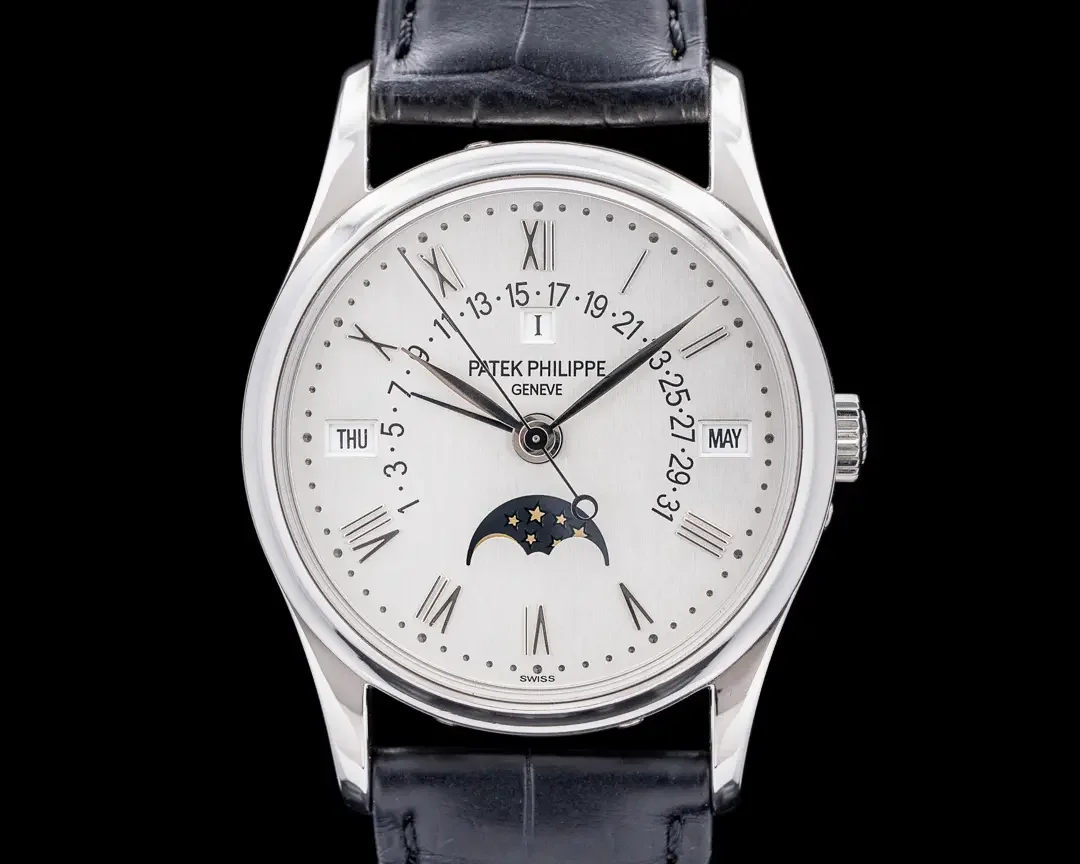
Regular Production 5050P: European Watch Company
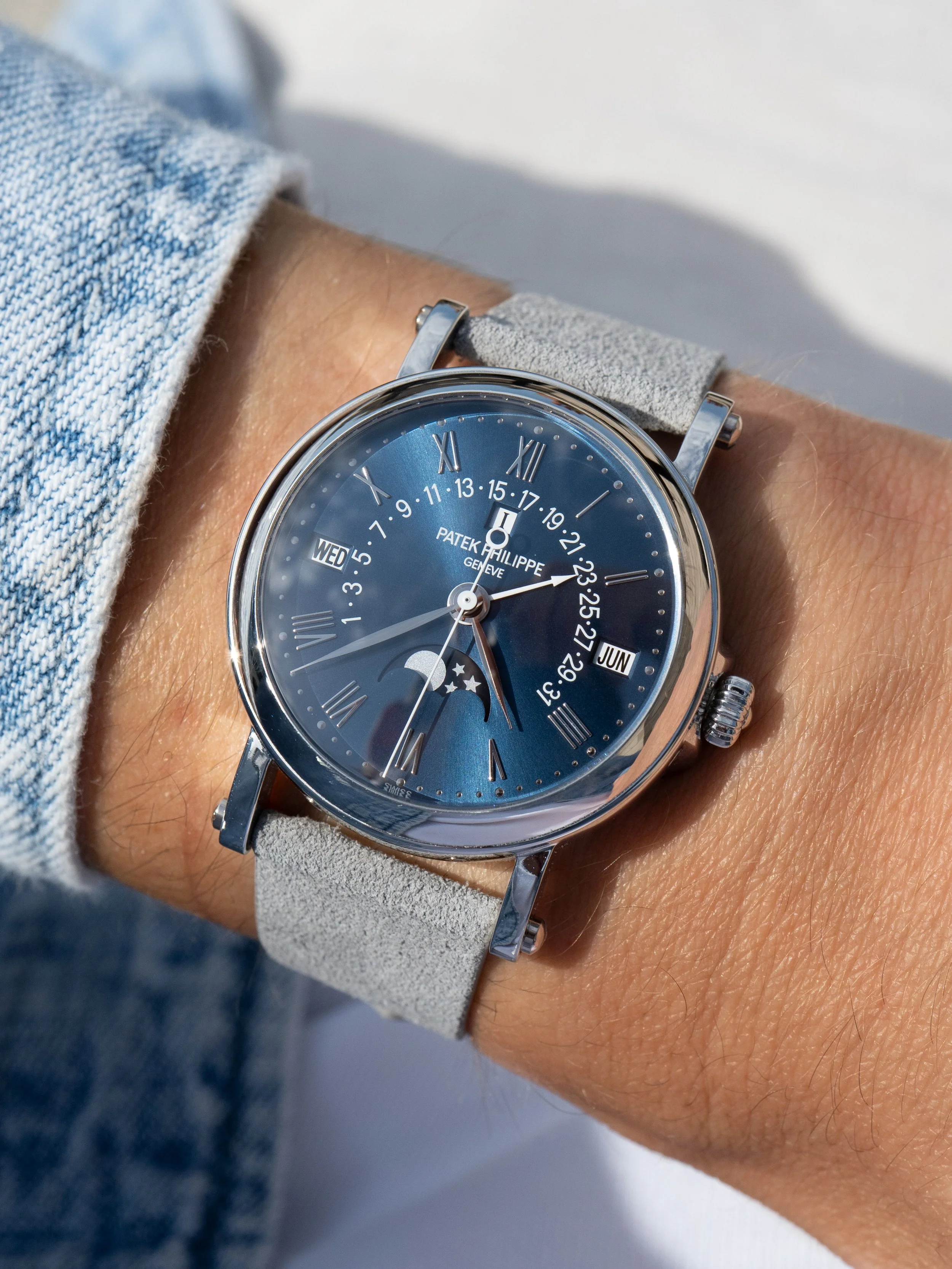
Saatchi 5059P-018: WBLDN
The 5038: more than a colour change
The salmon 5038 makes the same point in a more obscure reference. The standard watch is known for its black lacquered dial with white painted Roman numerals. On the special salmon example, those numerals become raised white-gold appliqués. That is not a colour swap. It is a different dial treatment.
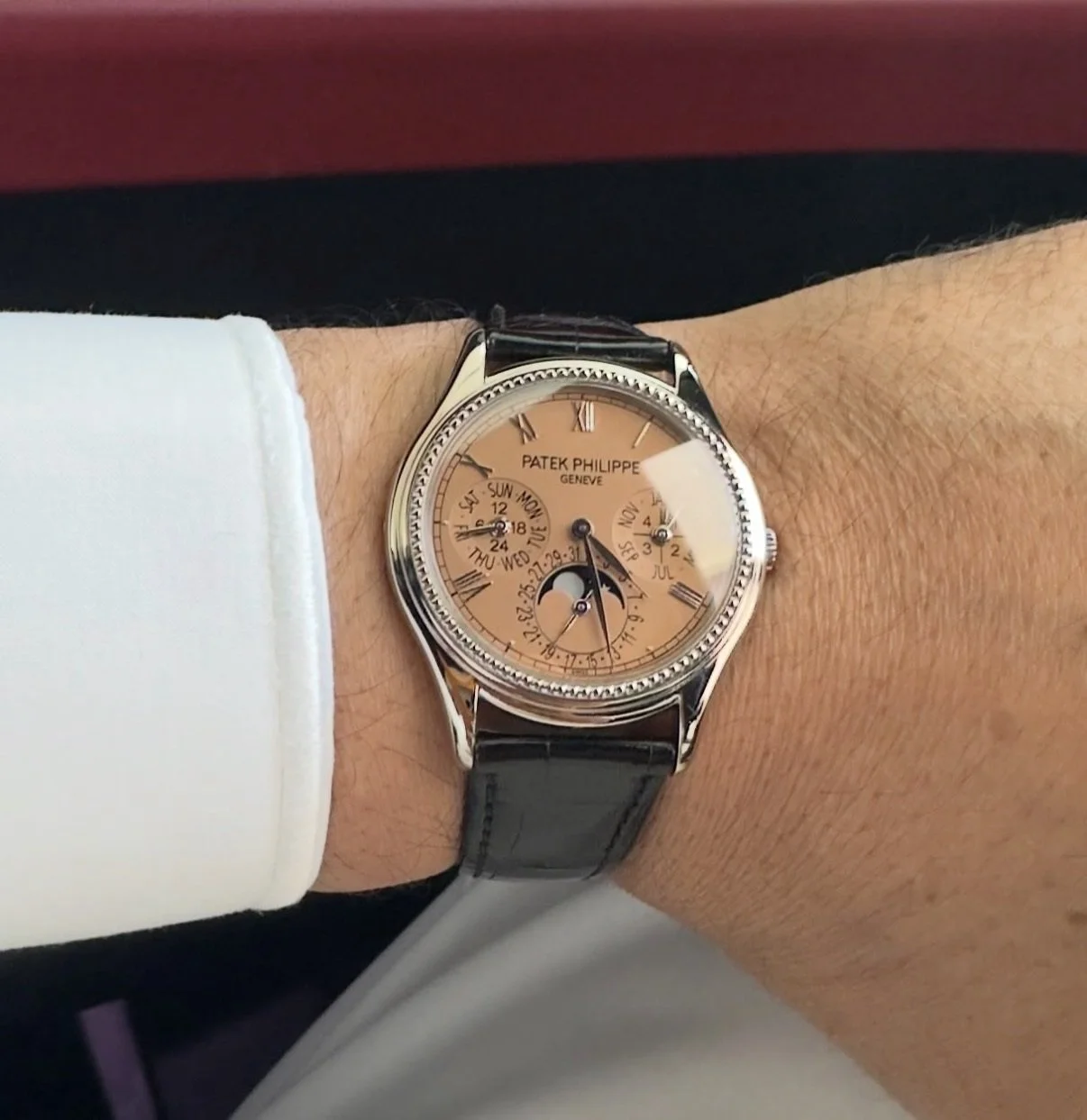
5038 ‘Vintage Collection’: Patekcollector / Instagram: https://www.instagram.com
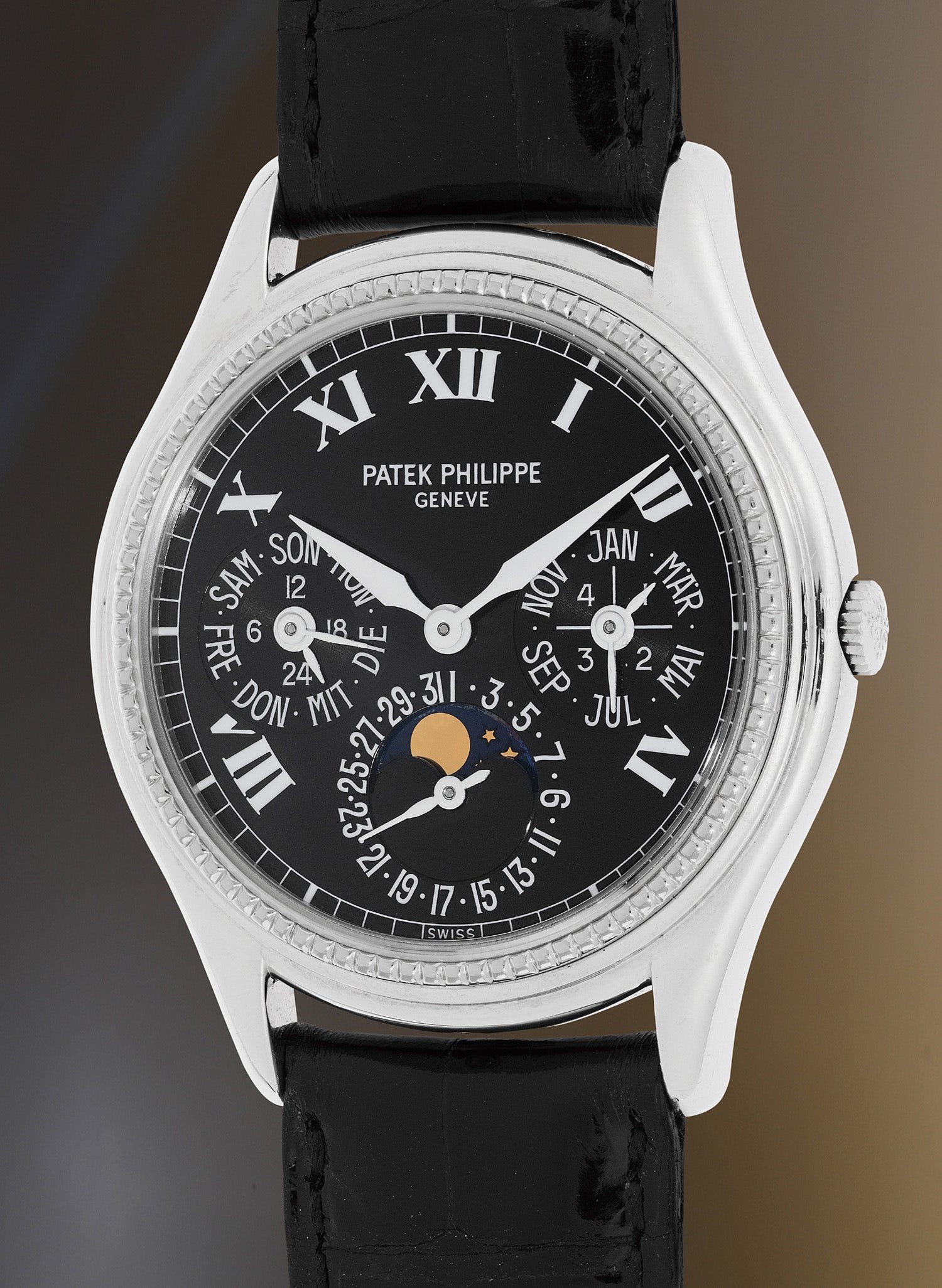
Production 5038: Phillips
The 3970 and the tachymeter
On the 3970 the most revealing change is not the black dial itself, but the return of the tachymeter. It was absent from standard production and had appeared on exceptional special-order 3970s before 2015. Its use on the Saatchi watches sits within that established language for unusual versions of the reference. The single Breguet 12 reinforces the effect, but the tachymeter is the detail that best links the watches to Patek’s earlier special-order practice.
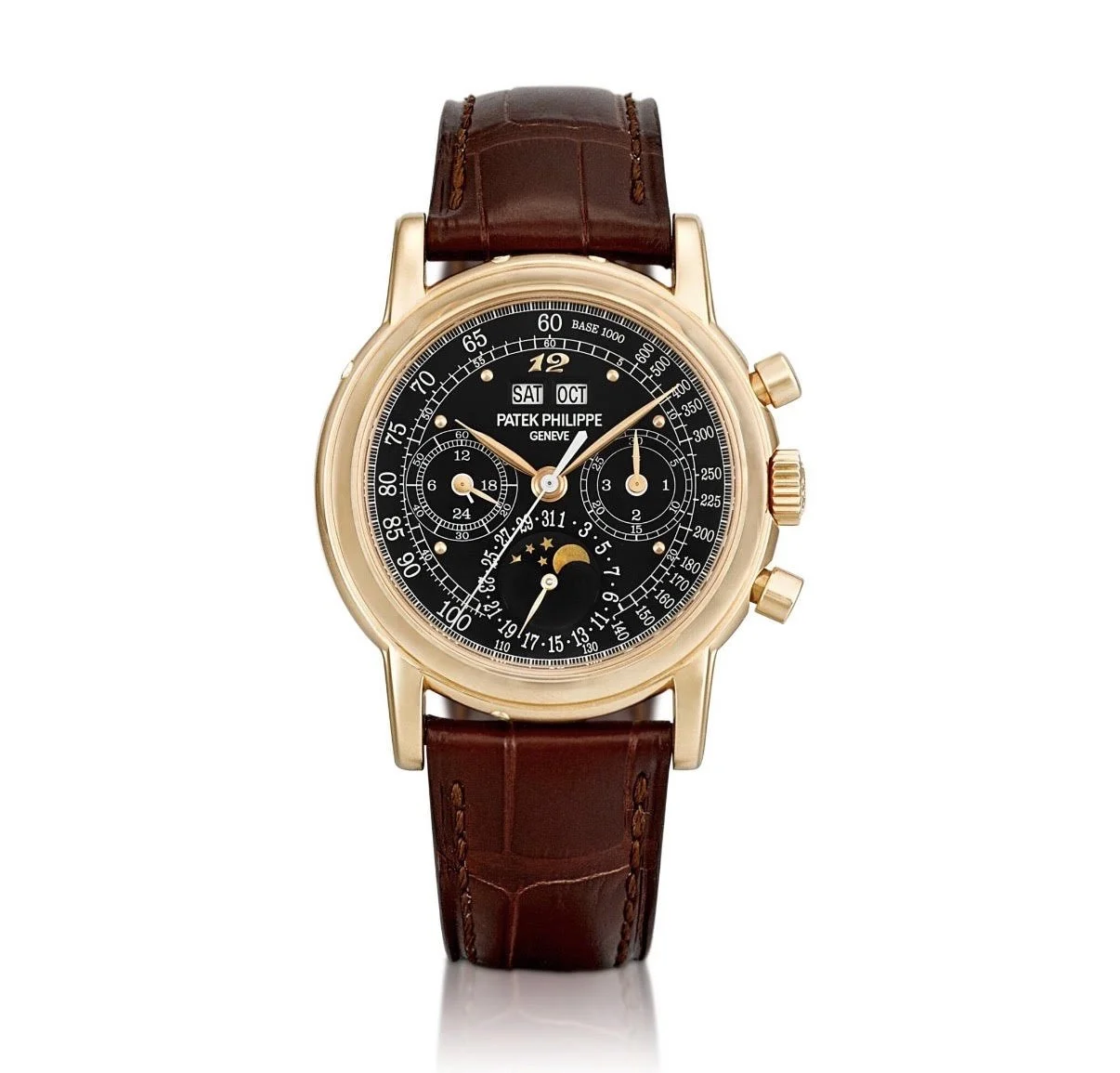
3970ER-028
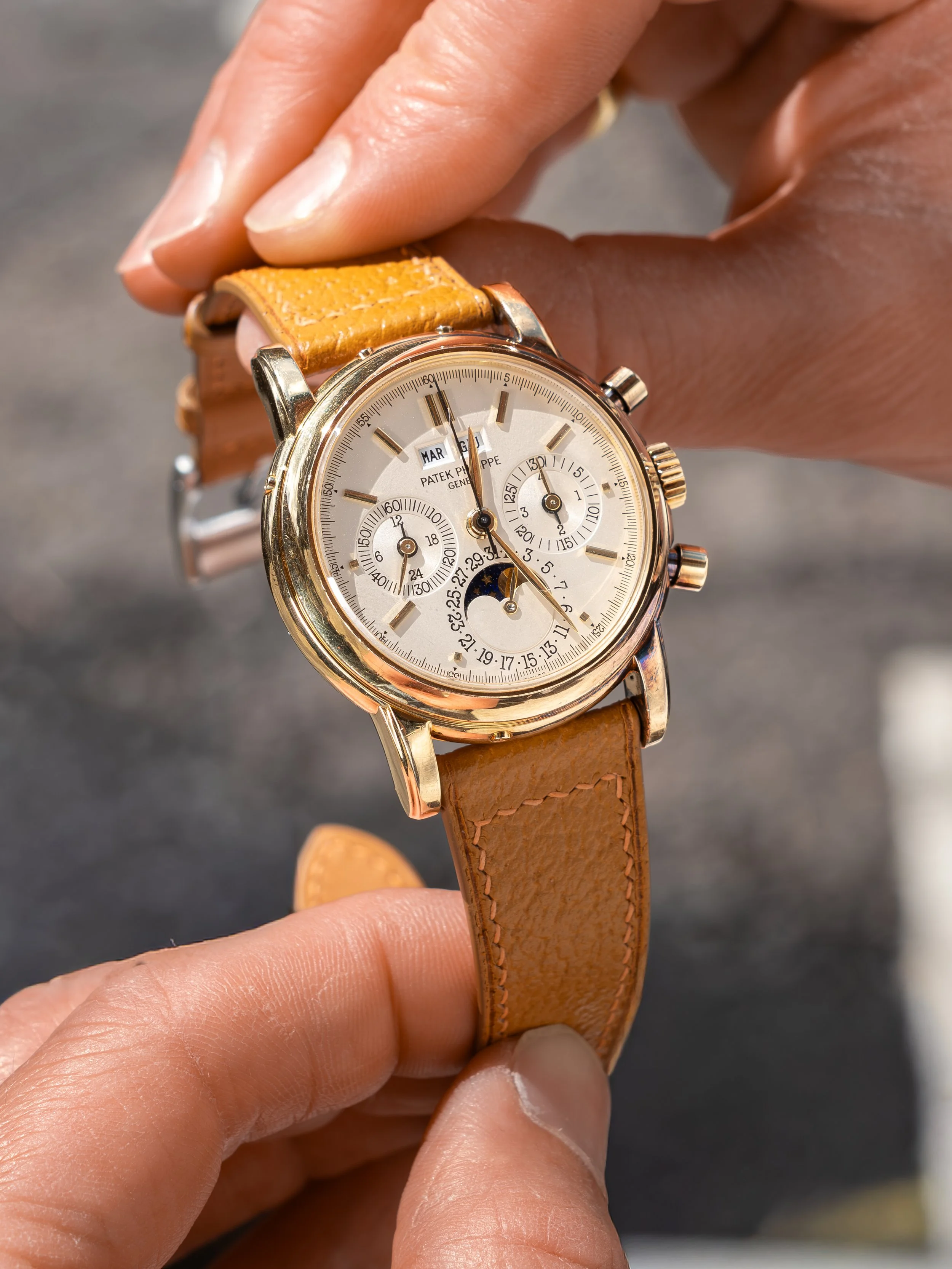
3970 2nd series
3970ER-028 and 3970 2nd series. Addition of the tachymeter on the Saatchi watch, does not appear on standard production.
3970ER-028 : Sotheby’s
3970 2nd series: Watch Brothers London, Photo by Tim Vaux
The 5070 and the smaller changes
The special 5070s are less radical architecturally. The familiar two-register layout remains intact, but Patek changed the dial colours, typography and details of the scales and subsidiary registers. The effect is subtle in isolation and obvious next to a standard 5070. These are new factory dial specifications, not simply ordinary dials produced in different colours.
The same principle should be kept in mind as more obscure Vintage Collection watches surface. The design language is relevant across the wider group, but the treatment is reference-specific. The evidence is in the watches themselves rather than in a single formula that Patek applied every time.
The presentation set
The way these watches were delivered is another indication that Patek regarded them differently from ordinary catalogue production. Documented examples repeatedly appear with unusually complete sets: fitted boxes or winders, Certificates of Origin, product literature, setting pushers and, on the perpetual calendars where applicable, additional solid casebacks.
More distinctive is the leather folio containing a photograph of the individual watch. Patek has long used this sort of personalised presentation for exceptional and piece-unique watches, and the practice continued here. It is not simply generic product literature. The photograph corresponds to the watch being delivered.
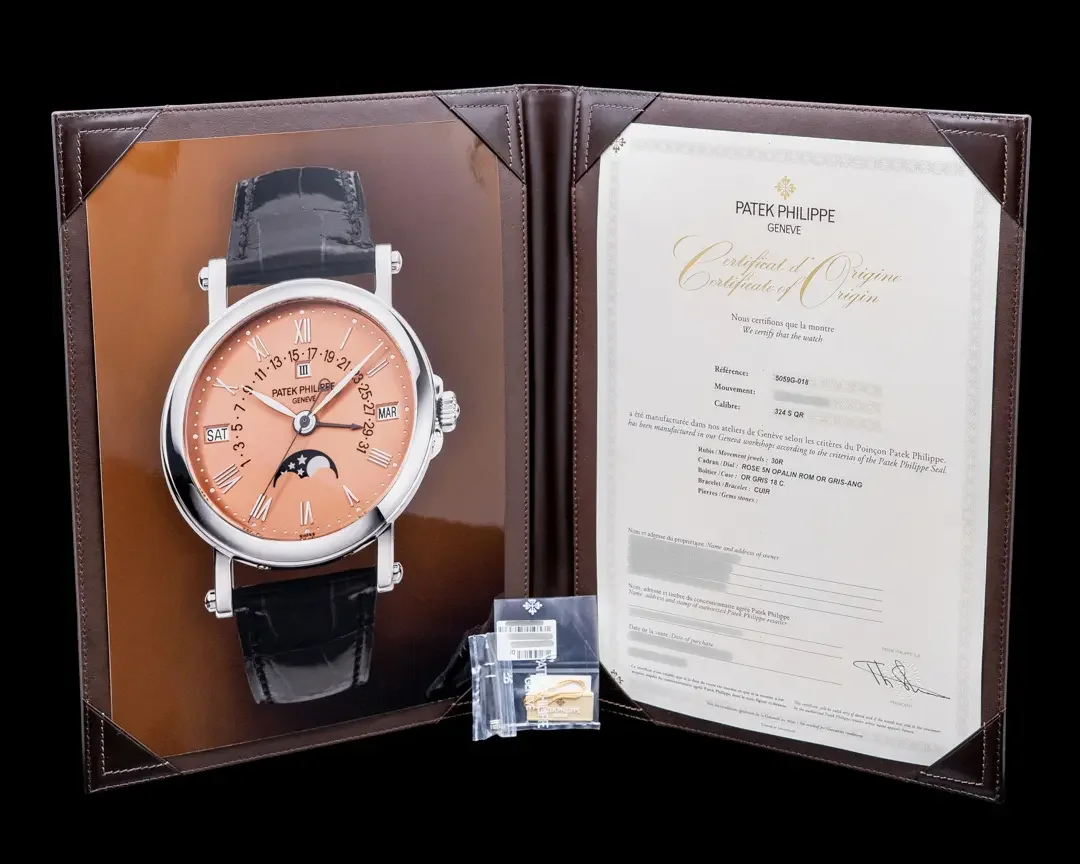
Example 5059 Set: European Watch Company
The 5070 received an especially elaborate version. Collectability describes a large leather portfolio containing the watch photograph, description, instructions and Certificate, with a separate smaller leather portfolio for the normal product literature. A surviving 5070P-013 set photographed by Nobeluhren shows the watch against multiple dedicated pages of that larger folio, using different photographs rather than one generic product image. Other surviving 5070 material records the individual reference and movement number. Taken together, the presentation is clearly specific to the watch being delivered.

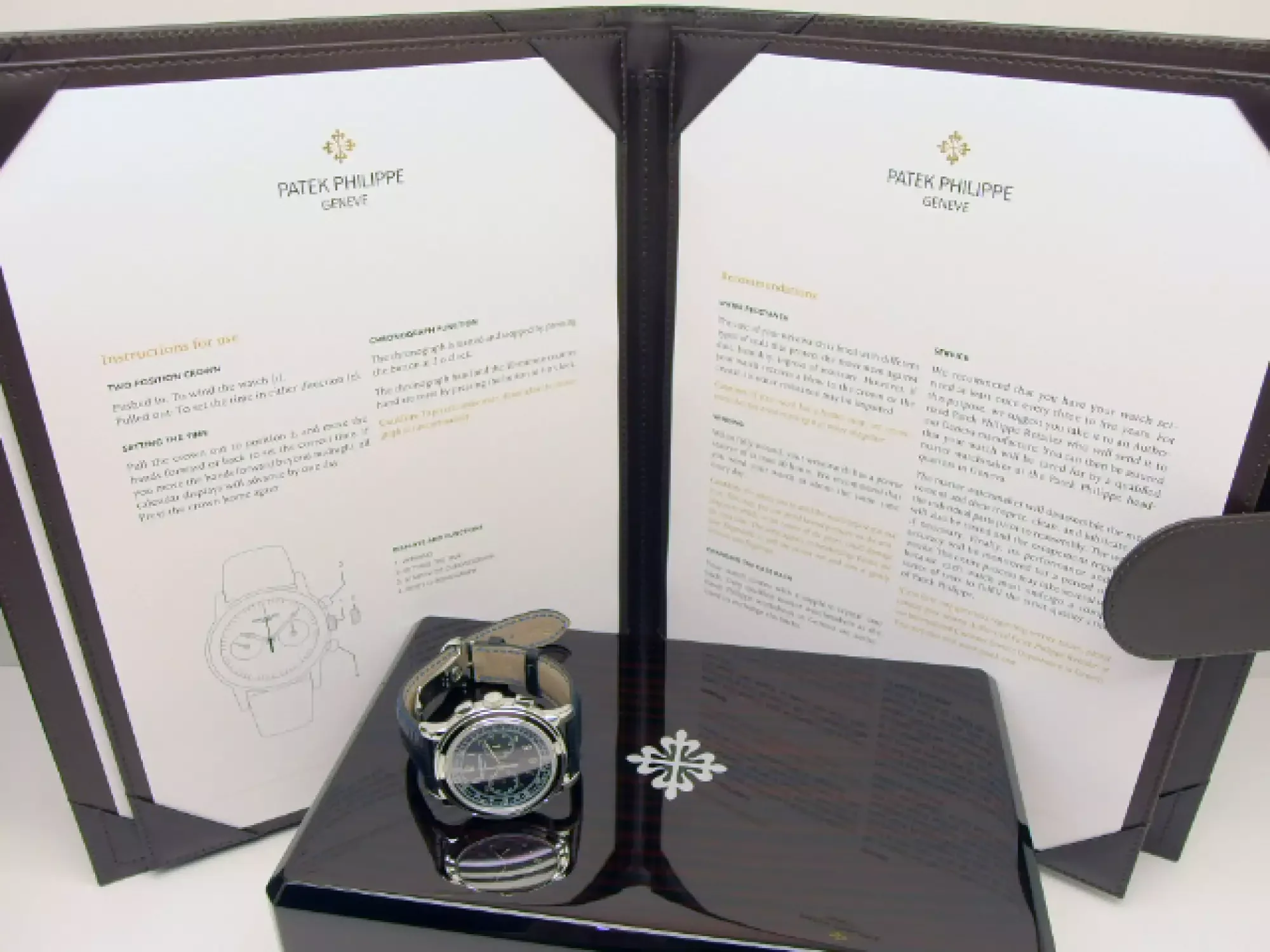
Nobeluhren: 5070P-013 full set and folio photography: https://www.nobeluhren-store.de
The presentation material continued beyond 2015. The later 5039G-013, for example, was delivered with its leather portfolio, setting pin, additional back, winder and documentation in 2019. Patek may have said very little publicly about the watches, but the way it chose to present them is useful evidence in its own right.
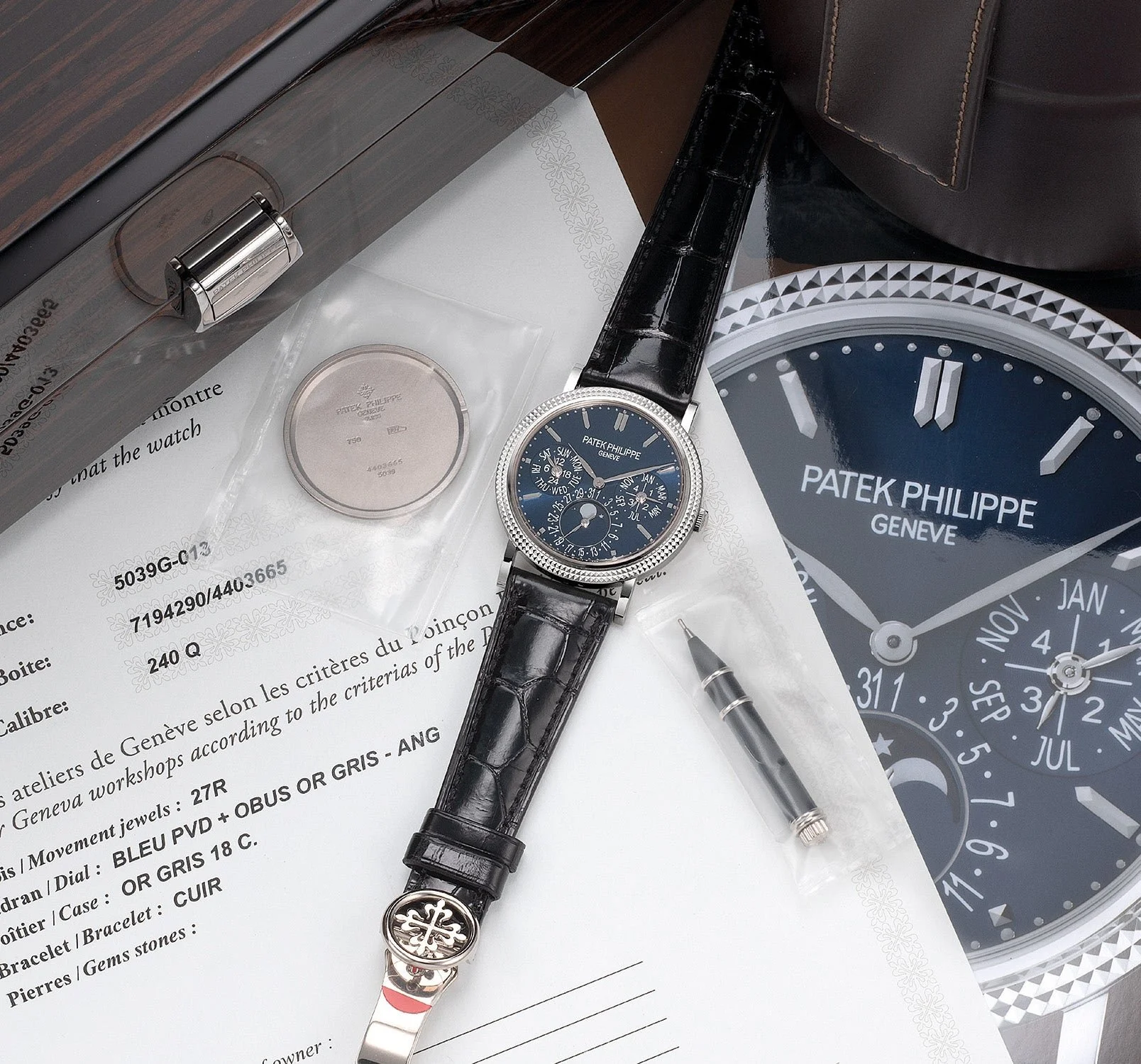
Philips: 5039G-013 full set and folio photography: https://www.phillips.com
The market is beginning to understand them
The market’s understanding of these watches has improved materially, but it is still uneven. The 5070 is probably furthest along. Serious collectors now recognise the special 5070 configurations as an important part of the reference’s history, the research around them has improved and prices reflect that. A salmon 5070G-014 sold for CHF852,800 in 2022, roughly US$850,000 at the time, and another brought CHF711,200 in May 2026, around US$910,000.
The 3940 and 3970 are moving in the same direction. The broader market for normal examples of both references has strengthened in recent years, with more attention being paid to condition, dial variants and exceptional production. That has coincided with more of the unusual watches coming back into view and with auction houses, dealers and collectors becoming better at distinguishing standard production, special orders and the later out-of-production pieces. Recent sales of the black 3940J-028 and the Saatchi 3970s are good examples of that growing recognition.
Elsewhere, understanding is much less developed. A 5039 or an obscure 5038 may be rarer than one of the famous salmon 5070s and still attract a fraction of the attention, simply because far fewer collectors know what they are looking at. That is one of the reasons prices across the group are so inconsistent. There is no single “Saatchi premium” or “Vintage Collection premium”. The underlying reference matters, the dial matters, the completeness of the set matters and, unusually, knowledge matters as well. In time this may change as collectors learn more about the references that exist and their link to one another.
The published record is also incomplete in a way that is easy to underestimate. The watches that are easiest to find today are often the ones that were already understood when they were offered and likely produced in larger numbers. If an unusual 5039 or 5059 was described simply as a rare dial variant, with no attempt to connect it to this wider history, it can be almost invisible to a later search for Vintage Collection watches.
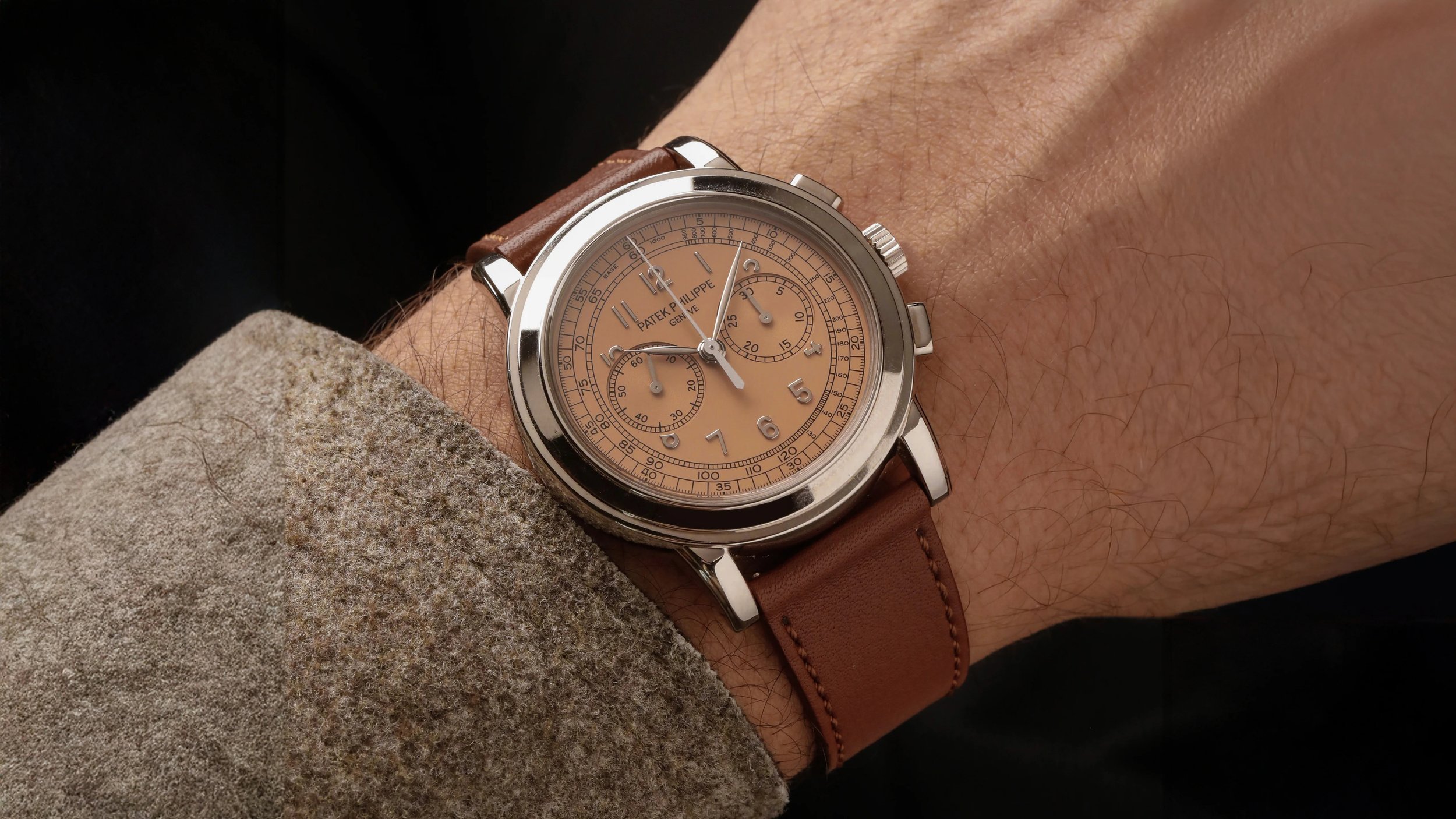
5070G-014
The salmon 5070G-014 has become one of the most recognisable watches in the group. Its market is now much more developed than that of many obscure non-Saatchi configurations.
Source: hairspring.com
Where this leaves the story
Saatchi is where most people first come across these watches, but it was only one part of what Patek was doing. As we now know, examples were being made before the exhibition, production continued afterwards, and some of the most interesting configurations never appeared in London at all. The exhibition now looks less like a self-contained group and more like a rare public view of a much broader period of special production.
That is what makes the group so interesting as these already important references, were brought back years after normal production had ended and often changed quite deliberately. Different dials, different hands, different typography and, in some cases, details that had previously appeared on special-order Pateks, with modern design language.
There is also still a surprising amount we do not know. Patek has never explained how the watches were produced, how many were made, how long individual configurations remained available or whether everything collectors now group together was even thought of internally in the same way. The familiar “one of five” story may be right for some examples, but it is increasingly difficult to believe it applied uniformly across the group. The fact that some configurations appear repeatedly over several years, while others are barely seen at all, suggests production was probably much less uniform than the simple story implies.
The market has started to understand some of this, notably the special 5070s which are now well established; while the unusual 3940s and 3970s are receiving much more attention in line with the surge in the references’ popularity. The less well known references are still far less understood, and in some ways that makes them even more interesting. Watches such as the 5038, 5039, 5041, 5050 and 5059 have had much less attention, yet some of these may ultimately prove to be among the rarest.
For us, that is the appeal of the whole subject. The watches are interesting in their own right, but so is the fact that the picture is still incomplete. New examples, certificates, old photographs and original presentation material continue to add pieces to the story, and hopefully challenge things that had previously been accepted as fact.
There is almost certainly more out there. If you own one of these watches, or have photographs, certificates or information that adds to the picture, we would love to hear from you and keep updating the guide.
Research notes and direct source links
The links below are the working source trail for this guide. They do not all use the same terminology and several repeat assumptions that this article questions. Their greatest value is often in the photographs, certificates, movement numbers and first-hand accounts they preserve.
Patek Philippe: Watch Art Grand Exhibitions archive — link
Patek Philippe: 2009 Patek Philippe Seal announcement — link
Patek Philippe: reference 5140 press release, 2006 — link
Phillips: Saatchi Edition overview — link
Collectability: collector’s guide to the 5070 — link
Phillips: collector’s guide to the 3970 — link
Quill & Pad / GaryG: 3940P-027 Vintage Collection — link
Quill & Pad: London exhibition pieces — link
Patek 5070 blog archive — link
Phillips: 5070G-014, 2014 — link
Phillips: 5070G-014, 2026 — link
Phillips: 3970EP-046 — link
Christie’s: 5059P-018, 2021 Geneva Seal example — link
Christie’s: 5059P-018, circa 2015 PP Seal example — link
Christie’s: 5059G-018, circa 2015 Geneva Seal example — link
Christie’s: 5059G-018, circa 2014 PP Seal example — link
Christie’s: 5970J-014, circa 2020 — link
Collectability: collector’s guide to the 5970 — link
Sotheby’s: 5970G-019 with January 2014 certificate — link
Monaco Legend Auction: 5970J-014 — link
Kinsmen: 3940R-027 brown dial, circa 2021 — link
Phillips: standard 5038 with white painted Roman numerals — link
Patekcollector / Instagram: salmon-dial 5038 photograph — link
Nobeluhren: 5070P-013 full set and folio photography — link
Phillips: 5039G-013, 2019 — link
European Watch Company: 5041G-022 salmon, September 2014 papers — link
European Watch Company: 5041G-023 blue, September 2014 papers — link
Phillips: 3940J-028 black dial, 2020 — link
European Watch Company: 5159G-012 London Edition — link
Hairspring: 5070G-014 and presentation material — link
Christie’s: Geneva Salon 3970 group, 2025 — link
5050J-023, manufactured 2008: https://www.christies.com/en/lot/lot-6590181
5050J-024, manufactured 2008: https://www.christies.com/zh/lot/lot-6293271
Phillips: 3940G-029 salmon dial image — link
Phillips: 3970ER-028 image — link
A Collected Man: 5059G-018 salmon dial image — link
A Collected Man: 5059P-018 blue dial image — link
European Watch Company: 5059R-017 brown dial image — link
Phillips: 5070J-012 brown dial image — link
Phillips: 5070P-013 blue dial image — link
Sotheby’s: 5070R-014 black dial image — link
Quill & Pad / GaryG: 3940P-027 image — link
Christie’s: 3970ER-021 Geneva Salon image — link
Christie’s: 3970EG-028 Geneva Salon image — link
Christie’s: 3970EJ-020 Geneva Salon image — link
Christie’s: 3970EP-038 Geneva Salon image — link
SJX: Eric Clapton special-order 3970 image — link
Christie’s: Michael Ovitz 3970EP-047 — link
Phillips: Eric Clapton special-order 3970 auction record — link